Ask five maintenance contractors to price “planned maintenance for the building” and you will get five very different proposals: different tasks, different frequencies and different assumptions about what is included. Comparing them fairly is almost impossible, and the cheapest bid often turns out to be the one that quietly left things out.
SFG20 exists to solve that problem. It gives clients, facilities managers and contractors a common language for what maintenance should be done, how often, by whom and why. Used well, it underpins a defensible maintenance specification, cleaner tenders and better evidence of compliance. Used badly, it becomes an oversized task list that nobody follows. This guide explains how SFG20 is structured, what its criticality ratings mean and how to turn it into a practical specification for your buildings.
Key takeaways
- SFG20 is the building engineering services industry’s standard for maintenance specification, created by BESA in 1990 and now delivered through the Facilities-iQ platform.
- Each schedule sets out tasks, frequencies, skill sets and a criticality rating for a type of asset.
- Red tasks are statutory, pink tasks are business-critical, amber tasks are best practice and green tasks are discretionary.
- SFG20 is not law. It translates legislation and standards into tasks, but your legal duties still come from the legislation itself.
- The real value comes from tailoring schedules to an accurate asset register and recording the reasons for your decisions.
What SFG20 is
SFG20 is a library of planned maintenance schedules for building services and building fabric. It was created in 1990 by the Building Engineering Services Association (BESA) and is described by its publisher as the industry standard for building maintenance specification. Today it is accessed through a subscription platform called Facilities-iQ, which lets users browse schedules, tailor them, share them with contractors and export them to CAFM and CMMS systems.
The library is maintained by an in-house technical authoring team that reviews changes to legislation, British and European Standards and industry guidance, then updates the affected schedules. That matters because standards move. In electrical work alone, BS 7671 has been amended several times in recent years, and standards such as BS 5266 and BS 5839-1 are revised periodically, so a maintenance specification written a decade ago may no longer reflect current practice.
SFG20 is widely used across both the public and private sectors, and many clients ask for contractors to work to it in tenders. It is not, however, a piece of legislation, and no general law requires you to use it.
How an SFG20 schedule is structured
Each SFG20 schedule relates to a type of asset, such as a type of boiler, air-handling unit, distribution board or emergency lighting system. Within each schedule you will typically find the following elements.
Tasks
A list of individual maintenance activities, from visual inspection and cleaning to functional testing, measurement and component replacement. Each task is written in plain, practical terms so that an engineer knows what to do and a client knows what they are paying for.
Frequencies
How often each task should be carried out: weekly, monthly, quarterly, annually and so on. Different tasks within the same schedule often have different frequencies.
Skill sets
The type of person who should carry out each task, for example an electrician, a mechanical engineer or a specialist. This helps you check that a contractor is putting the right people on the right work, and it helps contractors plan resources.
Timings and resources
Guidance on how long tasks typically take, which supports resource planning and helps sense-check prices.
Criticality
A colour-coded rating that indicates why the task matters, which is the feature most people associate with SFG20. It is covered in detail below.
Criticality ratings: red, pink, amber and green
SFG20 classifies every task according to its importance. The definitions below are summarised from SFG20’s own explanation of statutory tasks and criticality.
| Rating | Meaning | Practical approach |
|---|---|---|
| Red (statutory) | Tasks that may assist in achieving legal compliance, each traced to primary or secondary legislation | Treat as non-negotiable. Complete on time, keep evidence and report exceptions immediately. |
| Pink (business-critical) | Tasks that are critical to your particular business, contract or sector but not required by law. Users create these by tailoring a schedule. | Use for assets whose failure would seriously affect operations, such as cold storage, data rooms or airport retail units. |
| Amber (optimal) | Best practice or function-critical tasks not directly linked to legislation. Skipping them may cause more serious problems later. | Include by default. Reduce only with a clear, recorded reason. |
| Green (discretionary) | Non-critical tasks with limited impact if missed, such as some readings or aesthetic work | Decide based on budget, building standards and client expectations. |
The colour coding is useful for more than prioritising. It lets you report compliance meaningfully. A dashboard that shows “92% of tasks completed” is far less helpful than one showing that all red tasks are complete and any shortfall is in green tasks, or, more worryingly, the other way round.
Note: A red rating identifies a task that supports a legal requirement; it does not mean the task alone makes you compliant. Legal duties usually also involve risk assessment, competent people, record-keeping and acting on what the maintenance finds.
Where SFG20 sits in relation to law and standards
It helps to picture building compliance as layers. At the top sit Acts of Parliament, such as the Health and Safety at Work etc. Act 1974, which set broad duties. Beneath them, regulations set more specific requirements, for example the Electricity at Work Regulations 1989, which require electrical systems to be maintained so as to prevent danger, or the Regulatory Reform (Fire Safety) Order 2005, which requires fire safety equipment to be maintained. Approved Codes of Practice and British Standards then explain how to meet those duties in practice: the HSE’s ACOP L8 for legionella, BS 7671 for electrical installations, BS 5266-1 for emergency lighting and BS 5839-1 for fire detection and alarm systems.
SFG20 sits at the bottom of that stack, translating all of it into tasks an engineer can carry out. That is why the standard is so useful, and also why it is important to understand its limits:
- If the legislation or a British Standard changes, the legal position changes immediately, whether or not your specification has been updated.
- SFG20 tells you what to maintain; it does not replace the detailed procedures in the relevant standards. An SFG20 task to inspect and test the fixed electrical installation is delivered by following BS 7671 and producing an Electrical Installation Condition Report.
- Some duties sit outside planned maintenance altogether, such as fire risk assessment, permits to work and contractor management.
Building a tailored maintenance specification
SFG20 is designed to be tailored, and an untailored specification is one of the most common causes of wasted maintenance spend. The process below works for a single building or a large estate.
1. Start with an accurate asset register
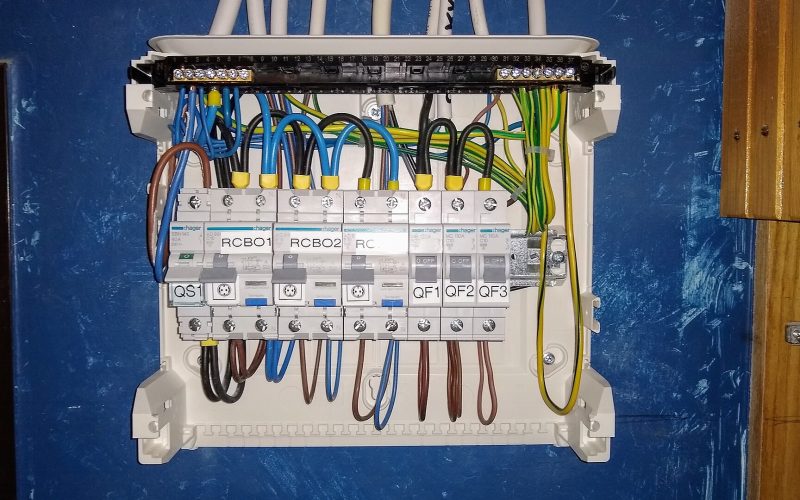
You cannot specify maintenance for assets you do not know you have. Survey the building and record each maintainable asset with a unique reference, location, type, size or rating, manufacturer and condition. For electrical services this should include main switchboards, distribution boards, emergency lighting, fire alarm panels and devices, door entry, CCTV and life-safety plant. Good asset data also feeds directly into the golden thread for higher-risk buildings, which we cover in our guide to the Building Safety Act for facilities managers.
2. Map each asset type to a schedule
Assign the appropriate SFG20 schedule to each asset type. Where an asset does not fit neatly, choose the closest schedule and tailor it, rather than leaving the asset unmaintained.
3. Tailor tasks and frequencies to risk
Review each schedule against how the building is actually used. A distribution board in a commercial kitchen experiences very different conditions to one in a quiet office. Promote tasks to pink where an asset is business-critical, and remove tasks that genuinely do not apply, such as tasks for components that are not fitted.
4. Record your reasons
Every change to a frequency or task should be recorded with a reason and the name of the person who approved it. If something goes wrong, a documented, risk-based decision is far easier to defend than an unexplained omission.
5. Review regularly
Revisit the specification when SFG20 schedules are updated, when legislation or standards change, when assets are added or removed, and when maintenance records show recurring failures.
Using SFG20 in tenders and contracts
A tailored SFG20 specification transforms the tender process. Because every bidder prices the same tasks at the same frequencies, you can compare like for like, and any qualifications or exclusions stand out clearly. It also helps to:
- Set clear deliverables. Contracts can refer to specific schedules, so there is no argument later about what was included.
- Define meaningful KPIs. Measure completion of red and pink tasks separately from the rest, and set response requirements for defects found during maintenance.
- Require evidence. Ask for task completion records, certificates and reports in a consistent format, ideally uploaded straight into your CAFM system.
- Handle defects properly. Planned maintenance will find faults. The contract should state how remedial works are quoted, approved and completed, and how long critical defects can remain open.
Our article on planned preventive versus reactive maintenance explains how to balance planned tasks against reactive cover when setting budgets.
Electrical and life-safety maintenance under SFG20
Electrical and life-safety systems are where red tasks concentrate, because so many of them are linked to safety legislation. Typical areas include:
- Fixed electrical installations. Periodic inspection and testing to BS 7671, with intervals guided by the previous report and the type of premises. Our EICR guide for commercial properties explains what to expect.
- Emergency lighting. Monthly functional tests and annual full-duration tests in line with BS 5266-1, with a logbook kept up to date. See our guide to emergency lighting testing.
- Fire detection and alarm systems. Weekly user tests and periodic servicing in line with BS 5839-1, covered in our article on fire alarm maintenance.
- Portable appliances. Inspection and testing based on risk, as set out in our guide to PAT testing.
- Distribution equipment. Visual inspection, cleaning, checks on terminations and, increasingly, thermal imaging to find overheating connections under load.
- Security systems. CCTV and door entry maintenance, which may be business-critical even where it is not statutory.
In every case, the SFG20 task identifies what needs to happen and how often; the engineer’s competence and the relevant standard determine how well it is done.
Common pitfalls to avoid
SFG20 is a powerful tool, but a few mistakes come up again and again. Check your specification against this list:
- Applying whole schedules without tailoring, so contractors price tasks for components that do not exist.
- Working from an incomplete or out-of-date asset register.
- Reducing amber task frequencies to save money without recording a reason or assessing the risk.
- Treating “SFG20 compliant” as a guarantee of legal compliance.
- Failing to update the specification when SFG20 schedules or British Standards change.
- Collecting completion ticks but not acting on the defects that maintenance uncovers.
- Keeping maintenance records in formats that cannot be searched, audited or handed over.
Tip: When you receive tender returns, ask each bidder to confirm the skill set they will use for red tasks. The cheapest price sometimes assumes a multi-skilled operative where the schedule calls for a qualified electrician or specialist.
How JKS London can help
JKS London has provided planned and reactive electrical and mechanical maintenance since 2004, with NICEIC approval for our electrical work. We can help you build an accurate asset register for electrical and life-safety systems, review an existing specification, and price and deliver planned maintenance against an SFG20-based specification, with clear records and prompt reporting of any defects we find.
Find out more about our maintenance services and wider facilities management support, view our planned maintenance plan, or contact us to arrange a free, no-obligation site visit.
Frequently asked questions
Is SFG20 a legal requirement?
No. SFG20 is an industry standard, not legislation. Many of its tasks are linked to legal duties, and many clients require contractors to work to it, but the legal obligations themselves come from statutes, regulations and approved codes of practice.
Do I need a subscription to use SFG20?
SFG20 content is licensed and accessed through its Facilities-iQ platform, so the organisation writing the specification normally holds a subscription. Contractors working to an SFG20 specification may also subscribe so they can view the full task detail.
Can I change SFG20 frequencies?
Yes, SFG20 is designed to be tailored. Frequencies and tasks can be adjusted for your assets and risk profile, but you should record why, and you should not reduce tasks that support a legal requirement below what that requirement and the relevant British Standard call for.
Does SFG20 cover electrical installations?
Yes. SFG20 includes schedules for electrical services such as distribution, emergency lighting and fire detection. Those tasks point to the relevant standards, such as BS 7671, BS 5266 and BS 5839-1, which the competent engineer then follows on site.
What is the difference between a red and an amber task?
Red tasks are statutory tasks linked to legislation and should be completed to help achieve compliance. Amber tasks are best practice or function-critical tasks that are not directly required by law, but skipping them may lead to failures or higher costs later.

Written by the JKS London technical team. NICEIC-approved engineers and compliance specialists maintaining airports, retirement villages, commercial and public-sector buildings since 2004. This guide is general information — for advice on your premises book a free site visit.