
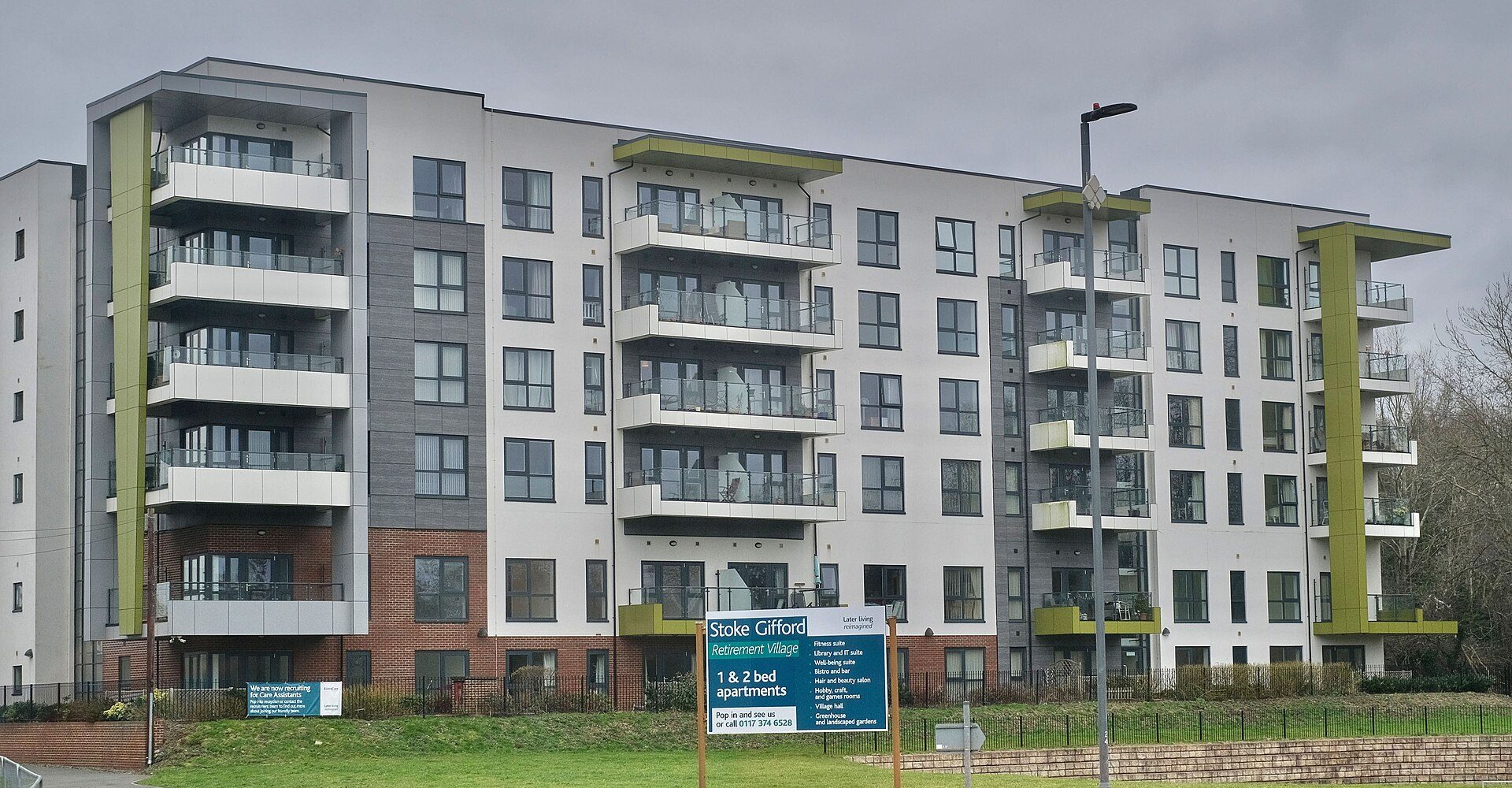
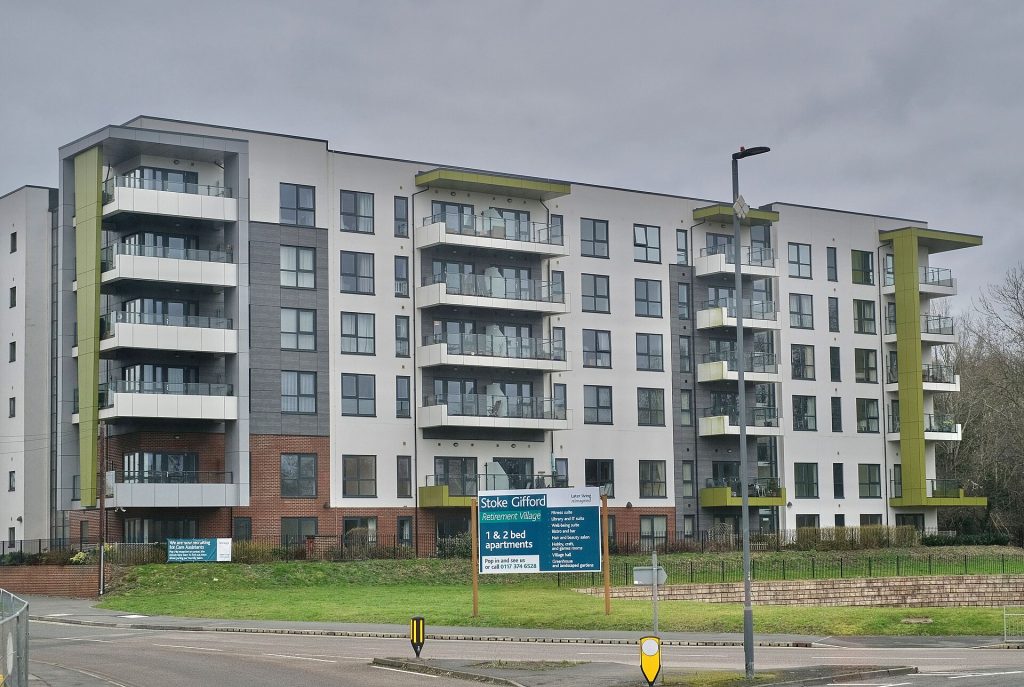
Retirement villages are some of the most rewarding, and most complex, buildings to look after. A single site can combine private apartments and cottages, a restaurant and bar, a swimming pool and spa, a gym, a library, guest suites, plant rooms, car parks and, on some sites, on-site care. Residents live there around the clock, many are older and some have mobility, sensory or cognitive impairments. That combination means electrical and life-safety systems have to work reliably, every time, and maintenance has to be carried out in a way that respects people’s homes.
JKS London works in the retirement living sector, including for Inspired Villages Group, where our work has included pool repairs at Bramshott. This guide sets out the main legal duties, the systems that need attention and a practical approach to building a compliance programme for a village.
Key takeaways
- Duties depend on tenure and building type. Communal areas, rented homes and long-leasehold homes are treated differently in law.
- The operator is usually the responsible person for fire safety in the common parts, and must maintain fire alarm and emergency lighting systems in efficient working order.
- Residential evacuation plan regulations have applied to in-scope buildings in England since 6 April 2026. Many villages are low-rise and outside their scope, but the principles are good practice.
- The analogue phone network switch-off by January 2027 affects telecare, warden call, lift and alarm signalling. Test end to end.
- Pools, spas and commercial kitchens are special risk areas that need closer attention than the rest of the site.
Why retirement villages are a special case
Most buildings fit neatly into a category: an office, a block of flats, a care home. Retirement villages do not. Homes are self-contained and usually owned on long leases or rented, so legally they are dwellings. Communal facilities look and operate like a hotel or leisure centre. Where personal care is provided on site, it is delivered to people in their own homes rather than in a care home setting.
A 2025 research report for the Building Safety Regulator, Fire Safety: Specialised Housing and Care Homes, highlighted this ambiguity. It noted that fire alarm design for specialised housing often ends up as a hybrid, with individual dwellings covered by BS 5839-6 and common parts by BS 5839-1. It also observed that compliance with the Building Regulations alone is not necessarily sufficient to protect vulnerable residents. For operators, the practical lesson is that each building and each system needs to be understood on its own terms, rather than assumed to follow a single standard.
The legal framework: who is responsible for what
Several overlapping pieces of legislation can apply. The table summarises the main ones in England.
| Legislation | Typically applies to | What it means in practice |
|---|---|---|
| Regulatory Reform (Fire Safety) Order 2005 | Common parts, communal facilities and workplaces; in multi-occupied residential buildings it covers the structure, external walls and flat entrance doors, as clarified by the Fire Safety Act 2021 | A suitable and sufficient fire risk assessment, and fire safety systems maintained in efficient working order and good repair |
| Fire Safety (England) Regulations 2022 | Buildings with two or more sets of domestic premises | Fire safety instructions and fire door information for residents; above 11 metres, quarterly checks of communal fire doors and annual checks of flat entrance doors |
| Fire Safety (Residential Evacuation Plans) (England) Regulations 2025 | Buildings at least 18 metres or seven storeys, and buildings over 11 metres with simultaneous evacuation | Person-centred fire risk assessments and residential PEEPs where residents want them, reviewed at least every 12 months |
| Electricity at Work Regulations 1989 | Communal installations, plant and anywhere staff work | Electrical systems maintained to prevent danger, so far as is reasonably practicable |
| Electrical Safety Standards in the Private Rented Sector (England) Regulations 2020, now extended to social tenancies | Homes let on tenancies or licences, excluding long leases of seven years or more | Inspection and testing at least every five years, reports to tenants and remedial work within 28 days |
| Building Safety Act 2022 | Higher-risk buildings: at least 18 metres or seven storeys with two or more residential units | Registration, safety case and ongoing duties for the accountable person |
The extension of the electrical safety standards to social housing came into force for new social tenancies in late 2025 and applied to existing tenancies from 1 May 2026, with initial checks of existing tenancies required by 1 November 2026. If your village includes affordable or social rented homes, make sure these are in your programme.
Note: Long-leasehold homes are generally the leaseholder’s responsibility internally, but the operator remains responsible for communal systems that serve them, such as fire alarm networks, door entry, warden call and landlord’s supplies. Your leases will define exactly where the boundary sits.
The electrical installation: communal areas and individual homes
Communal installations in a village tend to be larger and more varied than in a typical block of flats. They include landlord’s lighting and power, external lighting along paths and car parks, plant rooms, lifts, catering equipment, pool plant, gym equipment and electric vehicle or mobility scooter charging.
Periodic inspection
Every installation should have a current Electrical Installation Condition Report. IET Guidance Note 3 suggests maximum intervals, but these are a ceiling, not a target. The inspector should recommend an interval based on condition, use and environment. Our EICR guide explains the process, and our EICR cost calculator can help with budgeting.
Additional protection
In new work, BS 7671 requires residual current device (RCD) protection for socket-outlet circuits rated up to 32 A and, in dwellings, for lighting circuits. Since Amendment 2:2022, arc fault detection devices (AFDDs) have been required on certain socket-outlet circuits in care homes, houses in multiple occupation, purpose-built student accommodation and higher-risk residential buildings, and are recommended for other premises. For homes occupied by older residents, where an electrical fire could be slow to be noticed or escaped, AFDDs are worth considering when boards are replaced, even where they are not mandatory.
Pools, spas and wet areas
Swimming pools, saunas and hydrotherapy areas are special locations under Part 7 of BS 7671, with zones, supplementary bonding and restrictions on what equipment can be installed where. Chemicals, humidity and condensation attack equipment quickly. These areas justify more frequent inspection and close coordination between the electrical contractor and the pool plant specialist.
Commercial kitchens and restaurants
Village restaurants operate like any commercial kitchen, with heavy loads, heat and moisture, and gas interlocks on extraction systems. They should be treated as such in the maintenance plan.
Fire detection, alarm and emergency lighting
Fire safety systems are where electrical maintenance and resident safety meet most directly.
Fire alarms
Communal areas are normally covered by a system to BS 5839-1, while individual homes have alarms to BS 5839-6, which may or may not be linked to a communal system depending on the evacuation strategy. BS 5839-1 was revised in 2025. Changes include a stronger expectation of smoke detection, rather than heat detection, in rooms where people sleep, detection in stairway lobbies, a requirement for a cause-and-effect description at handover, and new guidance on cyber security for remote access. A six-monthly service by a competent person remains the norm, now with a tolerance of one month either side. See our guide to fire alarm maintenance under BS 5839-1 for detail.
Emergency lighting
Emergency escape lighting in corridors, stairs, communal lounges and external escape routes should be tested monthly with a brief functional test and annually with a full rated-duration test, in line with BS 5266-1, which was revised in 2025. Older residents may move more slowly and may be less confident in reduced light, so lighting along external paths to assembly points matters as much as internal escape routes. Our article on emergency lighting testing covers the detail.
Interfaces
Fire alarm systems in villages often interface with door holders, access control, automatic opening vents, lifts and warden call. These interfaces should be tested as part of servicing against the cause-and-effect, because a door that fails to release or a call system that fails to alert staff can undermine the whole strategy.
Evacuation strategy and residents with additional needs
Many retirement buildings are designed for a stay-put strategy, where residents in unaffected homes remain inside while the fire service deals with a fire. Others use simultaneous or progressive horizontal evacuation. The strategy shapes how fire alarms are configured, which is why electrical and fire alarm work must never be done without understanding it.
Since 6 April 2026, the Fire Safety (Residential Evacuation Plans) (England) Regulations 2025 have required responsible persons in in-scope buildings to identify residents who may need help to evacuate, offer them a person-centred fire risk assessment, agree reasonable mitigating measures and, where agreed, record a residential PEEP. Many villages are outside the height thresholds, but the same approach is widely regarded as good practice in specialised housing.
Some mitigating measures are electrical: vibrating pillow pads or visual alarm devices for residents with hearing loss, linked detection in a home that alerts on-site staff, or improved lighting on a route. These should be installed and certified properly, and included in the maintenance schedule rather than forgotten after installation.
Warning: Mobility scooters and powered wheelchairs are often charged inside homes or in communal stores. Lithium-ion batteries can fail violently. Agree where charging is allowed, keep it out of escape routes, provide suitable sockets so residents are not tempted to use extension leads, and review detection in charging areas.
Warden call, telecare and the digital switchover
Warden call, nurse call and telecare systems are lifelines for residents. Many older systems, along with lift emergency phones and fire alarm signalling to alarm receiving centres, were designed around analogue telephone lines. The government’s guidance on moving landlines to digital technologies confirms that the analogue network is being switched off by January 2027, and specifically names telecare devices and alarm systems as equipment that may need upgrading.
- List every system that sends a signal off site: warden call, telecare, fire alarm signalling, lift alarms, intruder alarms and door entry
- Confirm with each supplier whether the system is compatible with digital lines
- Check battery backup arrangements in case of a power cut, as digital equipment needs local power
- Test each system end to end after any line change, including the response at the receiving centre
- Record the tests and keep the results with your fire safety and electrical records
Planning maintenance around residents
A retirement village is people’s home. Good contractors adapt how they work accordingly:
- Notice: give clear written notice of power interruptions, ideally with a named contact, and avoid interrupting supplies to homes where residents rely on powered medical or mobility equipment without making alternative arrangements.
- Timing: schedule communal-area work around mealtimes, activities and quieter periods.
- Housekeeping: keep walkways clear and well lit, and remove trip hazards at the end of every day.
- Conduct: brief engineers on working in occupied homes: identification, courtesy, patience, and respecting privacy and belongings.
- Fire alarm work: coordinate with on-site staff so residents are not alarmed by test activations, and make sure systems are restored before engineers leave.
Building a compliance calendar for your village
A single calendar covering every system and every building is the most effective way to keep on top of compliance. A typical programme includes:
| Activity | Typical frequency | Reference |
|---|---|---|
| Fire alarm user test | Weekly | BS 5839-1 |
| Fire alarm service by a competent person | Six-monthly | BS 5839-1 |
| Emergency lighting functional test | Monthly | BS 5266-1 |
| Emergency lighting full-duration test | Annually | BS 5266-1 |
| Communal fire door checks (buildings over 11 m) | Quarterly | Fire Safety (England) Regulations 2022 |
| EICR of communal installation | As recommended by the inspector, typically up to five years | BS 7671, IET Guidance Note 3 |
| EICR of rented homes | At least every five years | Electrical Safety Standards Regulations |
| PAT of operator-owned equipment | Risk-based | IET Code of Practice |
| Warden call and telecare end-to-end test | As per manufacturer and after any change | Supplier guidance |
Planned preventive maintenance of this kind costs less, and causes less disruption, than repeated reactive call-outs. Our article on PPM versus reactive maintenance explains how to strike the right balance.
How JKS London can help
JKS London has been an NICEIC-approved electrical and M&E contractor since 2004, and we understand the regulations, procedures and legislative requirements that retirement village operators need to address. Our retirement living work covers both the technical side and the human side: careful planning, clear communication and engineers who respect the fact that they are working in people’s homes.
We provide EICRs and remedial works, emergency lighting testing, PAT testing, planned and reactive maintenance, door entry, CCTV and security systems, and refurbishment of communal facilities. Explore our electrical compliance and facilities management services, book a fixed-scope service through our online booking, or contact us for a free, no-obligation site visit.
Frequently asked questions
Do the private rented sector electrical safety regulations apply to retirement village homes?
It depends on tenure. Homes let on assured or similar tenancies are generally covered, which means a five-yearly inspection by a qualified person and remedial work within 28 days. Long leases of seven years or more, which cover many purchased retirement homes, are excluded, although the operator still has duties for the communal installation.
Do the Residential PEEPs regulations apply to low-rise retirement villages?
The Fire Safety (Residential Evacuation Plans) (England) Regulations 2025 apply to residential buildings at least 18 metres high or with seven or more storeys, and to buildings over 11 metres with a simultaneous evacuation strategy. Many villages are low-rise and fall outside the regulations, but person-centred evacuation planning remains good practice and is often expected by fire risk assessors.
How often should the communal electrical installation be inspected?
IET Guidance Note 3 suggests up to five years for most commercial-type installations, but the inspector should set the interval based on use and condition. Special locations such as swimming pools and spa areas usually justify shorter intervals.
Will the digital switchover affect our village's alarm and call systems?
It may. The analogue telephone network is being switched off by January 2027, and telecare, warden call, lift alarms and fire alarm signalling that rely on analogue lines need to be checked and upgraded where necessary. Test each system end to end after any change.
Can maintenance work be carried out without disturbing residents?
Most work can be planned to minimise disruption by giving notice of power interruptions, working in communal areas at quieter times, keeping walkways clear and making sure engineers are briefed on working respectfully in people's homes.

Written by the JKS London technical team. NICEIC-approved engineers and compliance specialists maintaining airports, retirement villages, commercial and public-sector buildings since 2004. This guide is general information — for advice on your premises book a free site visit.