

If you manage, own or occupy a commercial building, the condition of its fixed electrical installation is one of your most important — and least visible — risks. Cables run behind ceilings and inside walls, distribution boards sit in locked risers, and most faults give no warning until something trips, overheats or fails. An Electrical Installation Condition Report (EICR) is the recognised way to find out what state that installation is really in, record it formally and plan the work needed to keep people safe.
This guide explains what a commercial EICR is, what the law actually requires, how often inspections should take place, what happens on site, how to read the results and how to turn a report into a closed-out set of actions. It is written for facilities managers, landlords, property managers and business owners rather than electricians, so we have kept the jargon to a minimum.
Key takeaways
- An EICR is a formal report on the condition of a building’s fixed wiring, carried out to Part 6 of BS 7671 and recorded on the model form in Appendix 6.
- The Electricity at Work Regulations 1989 require electrical systems to be maintained so as to prevent danger; periodic inspection and testing is the accepted way to demonstrate that.
- IET guidance suggests a maximum interval of five years for most commercial premises, and shorter for higher-risk environments such as industrial sites, leisure facilities and swimming pools.
- C1 and C2 observations make a report unsatisfactory and need prompt action; C3 items are recommendations for improvement.
- Good preparation — access, drawings, previous reports and agreed isolation windows — makes an inspection faster, cheaper and more thorough.
What an EICR is — and what it is not
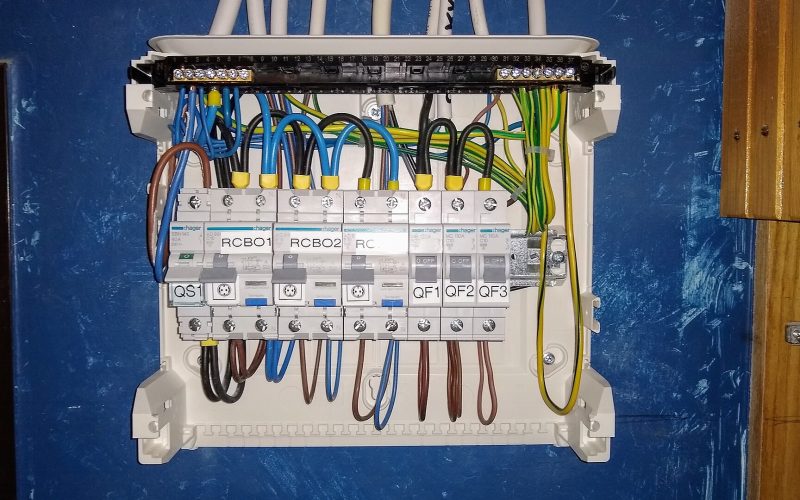
An EICR is a report on the condition of an existing electrical installation. It covers the fixed wiring and the equipment permanently connected to it: the incoming supply and main switchgear, sub-mains, distribution boards, final circuits, socket-outlets, lighting circuits, isolators, earthing and bonding arrangements and so on. The inspection and testing is carried out in line with Part 6 of BS 7671, the IET Wiring Regulations, and the findings are recorded on (or in a format based on) the model EICR form in Appendix 6 of the standard.
The purpose is to answer a simple question: is this installation in a satisfactory condition for continued use? To do that, the inspector looks for damage, deterioration, defects and conditions that could give rise to danger, and checks whether the protective measures — earthing, bonding, overcurrent protection, residual current devices (RCDs) — are still working as they should.
It is worth being clear about what an EICR does not cover. It is not a design review of a new installation (that is the role of an Electrical Installation Certificate), and it does not test portable appliances, which are dealt with through in-service inspection and testing — see our guide to PAT testing. Life-safety systems such as fire alarms and emergency lighting have their own British Standards and test regimes, covered in our article on emergency lighting testing to BS 5266.
The legal position for commercial buildings
There is no single statute in England that says “every commercial building must have an EICR every five years”. The duty comes instead from broader health and safety law. Regulation 4(2) of the Electricity at Work Regulations 1989 requires that, as may be necessary to prevent danger, all systems shall be maintained so as to prevent, so far as is reasonably practicable, such danger. The duty falls on employers, the self-employed and others who have control of electrical systems at work.
The HSE’s guidance on the Regulations, Memorandum of guidance HSR25, explains that regular inspection of equipment is an essential part of any preventive maintenance programme, and that records of maintenance, including test results, are of value throughout the working life of an installation. In practice, a current EICR is the clearest evidence you can produce that the fixed installation is being maintained.
Other drivers reinforce the need:
- Fire safety. Under the Regulatory Reform (Fire Safety) Order 2005, the responsible person must assess and reduce fire risks. Electrical faults are a common ignition source, and fire risk assessors routinely ask to see a current EICR.
- Insurance. Many commercial property insurers make a satisfactory periodic inspection a condition of cover, or will ask for one after a claim.
- Leases and transactions. Commercial leases frequently place electrical testing obligations on the landlord, the tenant or both, and buyers’ surveyors and lenders often request a recent report.
- Residential elements. In mixed-use buildings, flats let on assured shorthold tenancies fall under the Electrical Safety Standards in the Private Rented Sector (England) Regulations 2020, which require inspection and testing at least every five years. Government guidance confirms these duties have since been extended to the social rented sector.
Good to know: BS 7671 itself is not a statutory document, but HSE guidance recognises that installations designed, installed, inspected and maintained in accordance with it are likely to achieve conformity with the relevant parts of the Electricity at Work Regulations. That is why an EICR to BS 7671 carries so much weight.
How often should a commercial EICR be carried out?
The interval should be set by a competent person based on the type of premises, how it is used, the age and condition of the installation and the results of previous inspections. The IET’s Guidance Note 3, Inspection & Testing, publishes recommended maximum periods between inspections that are widely used as a starting point. Typical figures include:
| Type of premises | Typical maximum interval |
|---|---|
| Offices, shops and general commercial premises | 5 years (or change of occupancy) |
| Educational establishments | 5 years |
| Hospitals and medical premises | 5 years |
| Residential accommodation, including HMOs | 5 years (or change of occupancy) |
| Industrial premises | 3 years |
| Leisure complexes and theatres | 3 years |
| Swimming pools and marinas | 1 year |
| Construction site installations | 3 months |
These are maximums, not targets. An inspector will often recommend a shorter interval if the installation is old, heavily loaded, exposed to harsh conditions (commercial kitchens, plant rooms, external areas) or has a history of defects. You should also commission an inspection, regardless of when the last one was done, when:
- the building changes hands or a new tenant takes occupation;
- the use of the space changes significantly — for example office to food service;
- there has been a flood, fire, impact damage or water ingress;
- significant load has been added, such as EV chargers, heat pumps or extra kitchen equipment;
- you have no reliable records at all for the installation.
What happens during a commercial inspection
Agreeing the extent and limitations
A good EICR starts before anyone picks up a test instrument. The extent of the inspection (which parts of the installation are covered) and any limitations (areas that cannot be accessed, circuits that cannot be isolated) should be agreed with you in advance and recorded on the report. Vague limitations such as “no access to ceiling voids” or “10% tested” without explanation are a warning sign; they can leave significant parts of a building effectively uninspected.
Sampling
On larger installations it is normal practice to inspect and test a representative sample of circuits and accessories rather than every single item. The sample size should be justified by the condition of the installation, and the inspector should increase it if defects start to appear. Records from previous inspections help target the sample sensibly — another reason to keep them.
Inspection and testing
The visual inspection looks at the condition of switchgear, enclosures, cables and accessories; signs of overheating; correct labelling; fire-stopping where cables pass through walls and floors; and the presence of suitable protective devices. Testing then confirms what cannot be seen, typically including:
- continuity of protective conductors and bonding;
- insulation resistance between conductors and to earth;
- polarity;
- earth fault loop impedance, to confirm protective devices will disconnect quickly enough under fault;
- operation of RCDs.
Some of these tests require circuits to be switched off, so isolation planning is essential in occupied buildings. Many commercial inspections are carried out early in the morning, in the evening or at weekends, with critical loads such as servers, refrigeration and security systems identified before work starts. Amendment 4 to BS 7671, published in April 2026, also confirms that photographs and thermographic images can be attached to the report — useful evidence for property managers who need to show a board or client exactly what was found. A thermal imaging survey can complement the EICR by spotting hot joints under normal load.
Understanding the results: codes and outcomes
Each defect or observation on an EICR is given a classification code:
- C1 — Danger present. Risk of injury exists now. Immediate remedial action is required, and an inspector will usually make the situation safe before leaving site, for example by isolating the circuit.
- C2 — Potentially dangerous. Urgent remedial action is required. The defect may not be dangerous today but could become so under fault conditions.
- C3 — Improvement recommended. The installation does not meet the current edition of BS 7671 in some respect, but it is not considered dangerous.
- FI — Further investigation required. The inspector has found something that could not be fully assessed within the scope of the inspection.
Any C1 or C2 observation means the overall condition of the installation is reported as unsatisfactory. Under the revised Appendix 6 forms introduced by Amendment 4, NICEIC’s summary of the changes notes that FI observations no longer on their own make an installation unsatisfactory — but they still need following up, because the investigation may reveal a C1 or C2 defect. For a deeper explanation of each code, read our guide to EICR codes C1, C2, C3 and FI, or see NICEIC’s overview of Amendment 4.
Remember that BS 7671 is not retrospective. An installation designed to an earlier edition does not automatically fail because it differs from the current one. Codes should reflect the actual danger or potential danger a departure presents, which is why the experience and judgement of the inspector matter so much.
Warning: An unsatisfactory report that is filed away without action can be worse than no report at all. It shows that you knew about a risk. Make sure every C1 and C2 has an owner, a deadline and documented evidence of completion.
Remedial works: closing the report out properly
Receiving the report is only half the job. A practical close-out process looks like this:
- Triage. Separate C1 and C2 items (which need urgent action), FI items (which need investigation) and C3 items (which can be planned and budgeted).
- Scope and price. Ask for a clear remedial schedule that cross-references each item to the observation number on the EICR, so nothing is missed or duplicated.
- Complete and certify. Remedial work should be certified with a Minor Electrical Installation Works Certificate or, for new circuits and larger alterations, an Electrical Installation Certificate.
- File together. Keep the EICR, the remedial schedule and the completion certificates together so anyone — an insurer, an auditor, a fire risk assessor — can see the full picture.
- Plan the C3s. Improvements such as upgrading old boards, adding RCD protection or replacing obsolete accessories are best scheduled into your planned maintenance or capital programme rather than left indefinitely.
Where the report leads to larger works — rewires, new distribution, board replacements — consider whether they can be phased around occupancy, or combined with refurbishment work already planned for the building.
Preparing your building for an EICR
Preparation has a direct effect on how long the inspection takes, how much of the installation is genuinely covered and how disruptive it is for occupants. Before the inspector arrives, work through this checklist:
- Provide the previous EICR, any Electrical Installation Certificates and Minor Works Certificates since then.
- Locate as-built drawings, schematics and distribution board schedules, even if they are out of date.
- Arrange keys and access for plant rooms, risers, roof areas, ceiling voids, cupboards and tenant areas.
- Identify critical loads — servers, refrigeration, medical equipment, lifts, security and access control — and agree how they will be protected during isolation.
- Agree isolation windows with occupiers and tenants, and give them written notice.
- Tell the inspector about known problems: nuisance tripping, flickering lights, warm sockets or burning smells.
- Confirm who should receive the report and who can authorise urgent C1 work on the day.
Buildings with an up-to-date asset register and accurate circuit charts are consistently quicker and cheaper to inspect. If yours are missing, it is worth asking for them to be produced as part of the inspection — it pays back at every future visit.
Choosing an inspector and understanding costs
Periodic inspection requires a higher level of skill than routine installation work: the inspector has to make judgements about installations that may be decades old, built to several different editions of the Regulations. When choosing a contractor, check that they:
- are registered with a recognised scheme such as NICEIC, and that inspection and testing falls within their registered scope;
- hold appropriate professional indemnity and public liability insurance;
- will agree the extent, limitations and sampling approach in writing before starting;
- can provide a sample report so you can see the level of detail you will receive;
- can carry out remedial work, or work alongside your preferred contractor, without delay.
Our guide on how to choose and verify an NICEIC-approved contractor goes into more detail.
The cost of a commercial EICR depends mainly on the number of distribution boards and circuits, the size and complexity of the building, access arrangements and whether out-of-hours working is required. Be cautious of unusually low quotes: an inspection priced on the assumption of minimal testing may come with broad limitations that leave you with little real assurance. For an indication based on your own building, try our EICR cost calculator, or book directly through our commercial EICR service.
How JKS London can help
JKS London has been working with commercial clients across London and the South East since 2004. As an NICEIC-approved contractor, we carry out periodic inspection and testing to BS 7671 for offices, retail units, commercial kitchens, healthcare premises, retirement villages and airport concessions — planning isolations around your operations and producing clear, actionable reports.
Because we also deliver remedial works, planned and reactive maintenance and asset stewardship (asset registers, schematics and change-control support), we can help you move from an unsatisfactory report to a fully closed-out, well-documented installation. Find out more about our electrical compliance services, or contact us to arrange a free, no-obligation site visit.
Frequently asked questions
Is an EICR the same as a Periodic Inspection Report (PIR)?
Yes, in practice. The Periodic Inspection Report was replaced by the Electrical Installation Condition Report when the model forms in BS 7671 were updated, so an older PIR is simply the previous format of the same type of report.
In a commercial lease, is the landlord or the tenant responsible for the EICR?
It depends on the lease and on who controls each part of the installation. Typically the landlord covers landlord's supplies and common parts, while a tenant on a full repairing lease covers the installation within their demise, but the lease wording should always be checked.
Does an EICR cover the fire alarm and emergency lighting systems?
No. The EICR inspects the circuits that supply those systems, but fire detection and alarm systems are serviced to BS 5839-1 and emergency lighting is tested to BS 5266-1, each with its own certificates and logbook entries.
Can the same contractor carry out the EICR and the remedial works?
Yes, and many clients prefer it for continuity. Remedial work should be certified with a Minor Electrical Installation Works Certificate or an Electrical Installation Certificate, and you can ask for an independent review if you want extra assurance.
How long should we keep old EICRs?
Keep them for the life of the installation if you can. Previous reports show how the installation has changed over time, help the next inspector set a sensible scope and provide evidence of ongoing maintenance if you ever need to demonstrate compliance.

Written by the JKS London technical team. NICEIC-approved engineers and compliance specialists maintaining airports, retirement villages, commercial and public-sector buildings since 2004. This guide is general information — for advice on your premises book a free site visit.