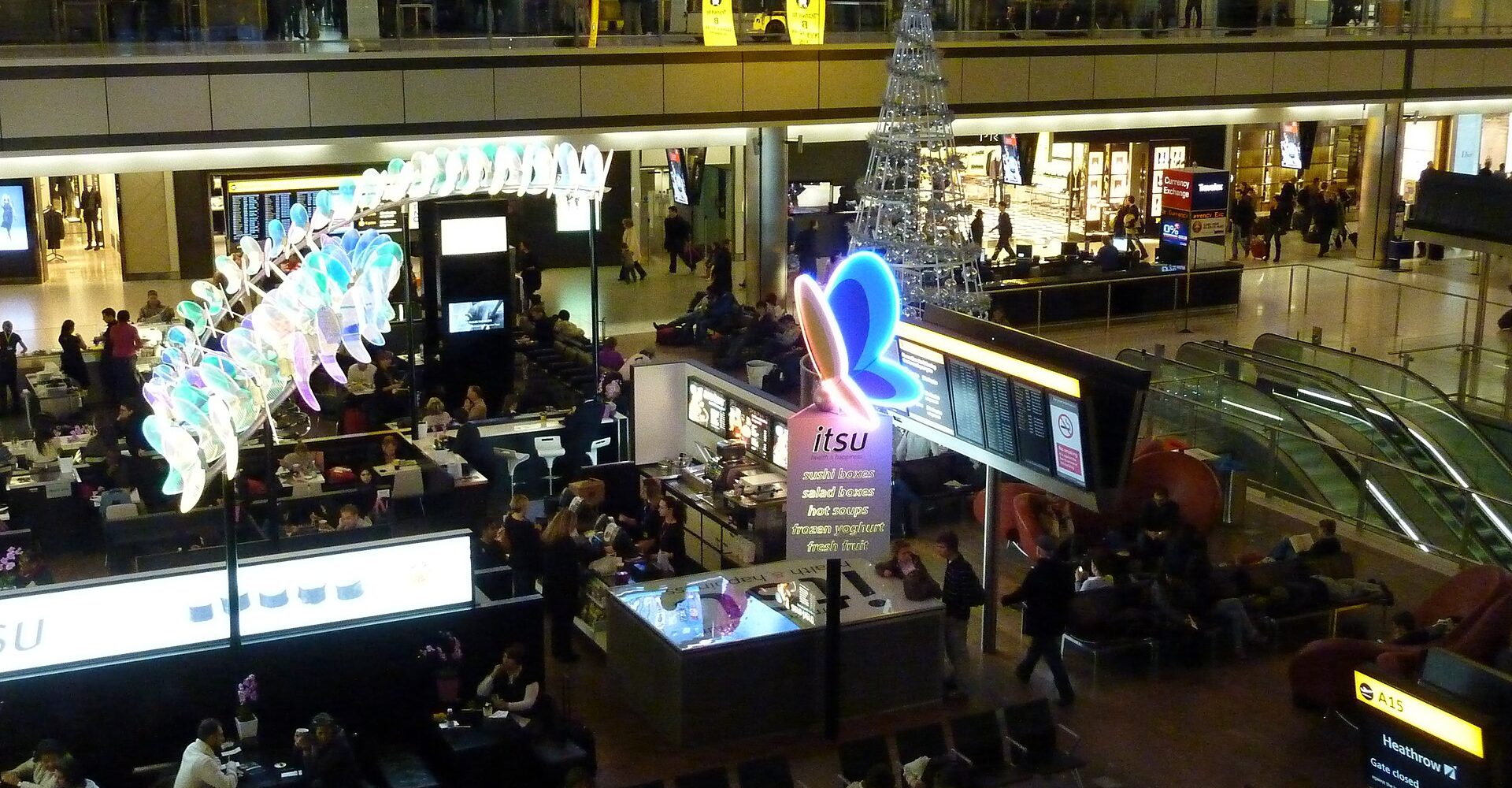
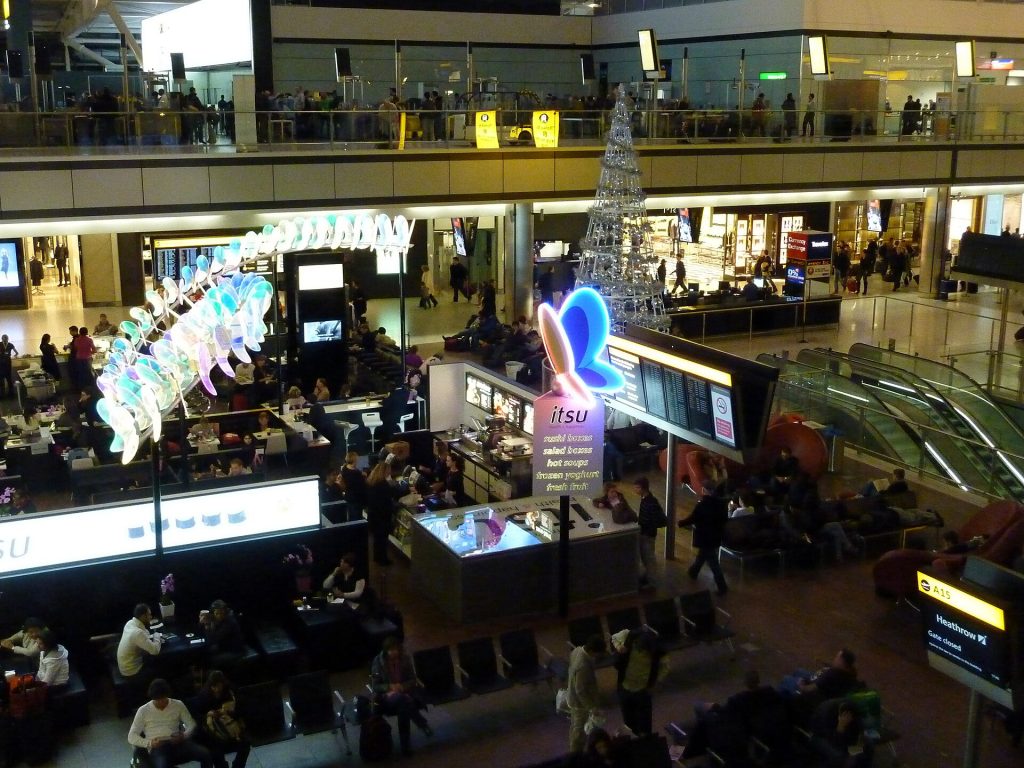
Running a restaurant, bar, café or shop inside an airport terminal means trading in one of the most tightly controlled environments in the country. The core legal duties are the same as on the high street: the Electricity at Work Regulations 1989, fire safety law and the wiring standard BS 7671. Layered on top are the airport operator’s own tenancy rules, permit-to-work systems, security vetting, restricted access windows and trading hours that can run from the first departure to the last arrival. When something fails, it is not only a safety issue; a tripped kitchen or a dark retail unit in a terminal is lost revenue and a conversation with your landlord.
JKS London has maintained commercial kitchens, restaurants and retail outlets in airports from Southampton to East Midlands, as well as London Heathrow, Gatwick, Stansted and Luton. This guide sets out how concession operators and their facilities teams can stay compliant without disrupting trade.
Key takeaways
- Your lease or tenant handbook defines where the airport operator’s responsibility ends and yours begins. Know your point of supply.
- The Electricity at Work Regulations 1989 require electrical systems to be maintained to prevent danger, so far as is reasonably practicable. BS 7671 is the benchmark used to show this.
- Commercial kitchens are the highest-risk spaces in most concessions: heat, grease, water, heavy three-phase loads and gas interlocks all need attention.
- Plan testing around airport controls: permits, fire alarm isolations, airside passes and out-of-hours windows all take time to arrange.
- Good records are as important as good wiring. Airport operators audit tenants, and you need to be able to show compliance quickly.
Who is responsible for what in an airport concession?
Airports are multi-occupied buildings. The airport operator (your landlord) owns and maintains the base-build electrical infrastructure, landlord’s distribution, terminal-wide life-safety systems and common areas. Each concessionaire is normally responsible for the installation from a defined point of supply, usually an isolator or tenant distribution board, along with everything connected to it.
Under the Electricity at Work Regulations 1989, duties fall on employers and on anyone who has control of an electrical system. In practice this means both parties hold duties for the parts they control. Fire safety works in a similar way. Under the Regulatory Reform (Fire Safety) Order 2005, where two or more responsible persons share premises, Article 22 requires them to co-operate and co-ordinate on fire safety measures. That is why terminal operators insist on tenants joining their fire alarm, permit and isolation procedures.
The table below shows a typical split. Always check it against your own lease and tenant handbook, because arrangements vary between airports and even between terminals.
| Item | Typically airport operator | Typically concession operator |
|---|---|---|
| Incoming supply and landlord’s distribution | Yes, up to the tenant point of supply | No |
| Tenant distribution boards, final circuits and fixed equipment | No | Yes |
| Terminal fire detection and alarm network | Yes, including the main panels | Any devices or interfaces installed as part of the tenant fit-out, as agreed in the lease |
| Emergency lighting | Common areas and landlord spaces | Inside the unit, including back-of-house and stores |
| Portable and plug-in equipment | Landlord-owned items only | All tenant equipment |
| Records and certificates | Landlord installation | Tenant installation, provided on request for audit |
The legal and standards framework
There is no special “airport wiring regulation”. The requirements are the ordinary ones, applied in a demanding setting.
Electricity at Work Regulations 1989
Regulation 4(2) requires that, as may be necessary to prevent danger, all systems are maintained so as to prevent danger, so far as is reasonably practicable. The HSE’s guidance on the Regulations (HSR25) explains that regular inspection, and testing where appropriate, is how most duty holders show they are meeting this duty.
BS 7671 and the EICR
BS 7671, the IET Wiring Regulations, is not law in itself, but it is the recognised benchmark for safe design, installation and inspection. Amendment 4:2026 was published in April 2026, so make sure your contractor is working to the current edition. Periodic inspection produces an Electrical Installation Condition Report (EICR), which classifies defects as C1 (danger present), C2 (potentially dangerous), C3 (improvement recommended) or FI (further investigation). Our guide to EICR observation codes explains what each means for your remedial programme.
Fire safety, emergency lighting and gas interlocks
Emergency lighting inside your unit should be designed, tested and recorded in line with BS 5266-1, and any fire alarm devices in your unit must work with the terminal system. In kitchens, the HSE’s catering information sheet Gas safety in catering and hospitality (CAIS23) explains that mechanical ventilation and gas supply should be interlocked so that a ventilation failure shuts off the gas, and states that manual bypasses of such interlocks are not permitted. These interlocks are electrical control systems, so they need to be part of your electrical maintenance as well as your gas safety regime.
Commercial kitchens: the highest-risk spaces
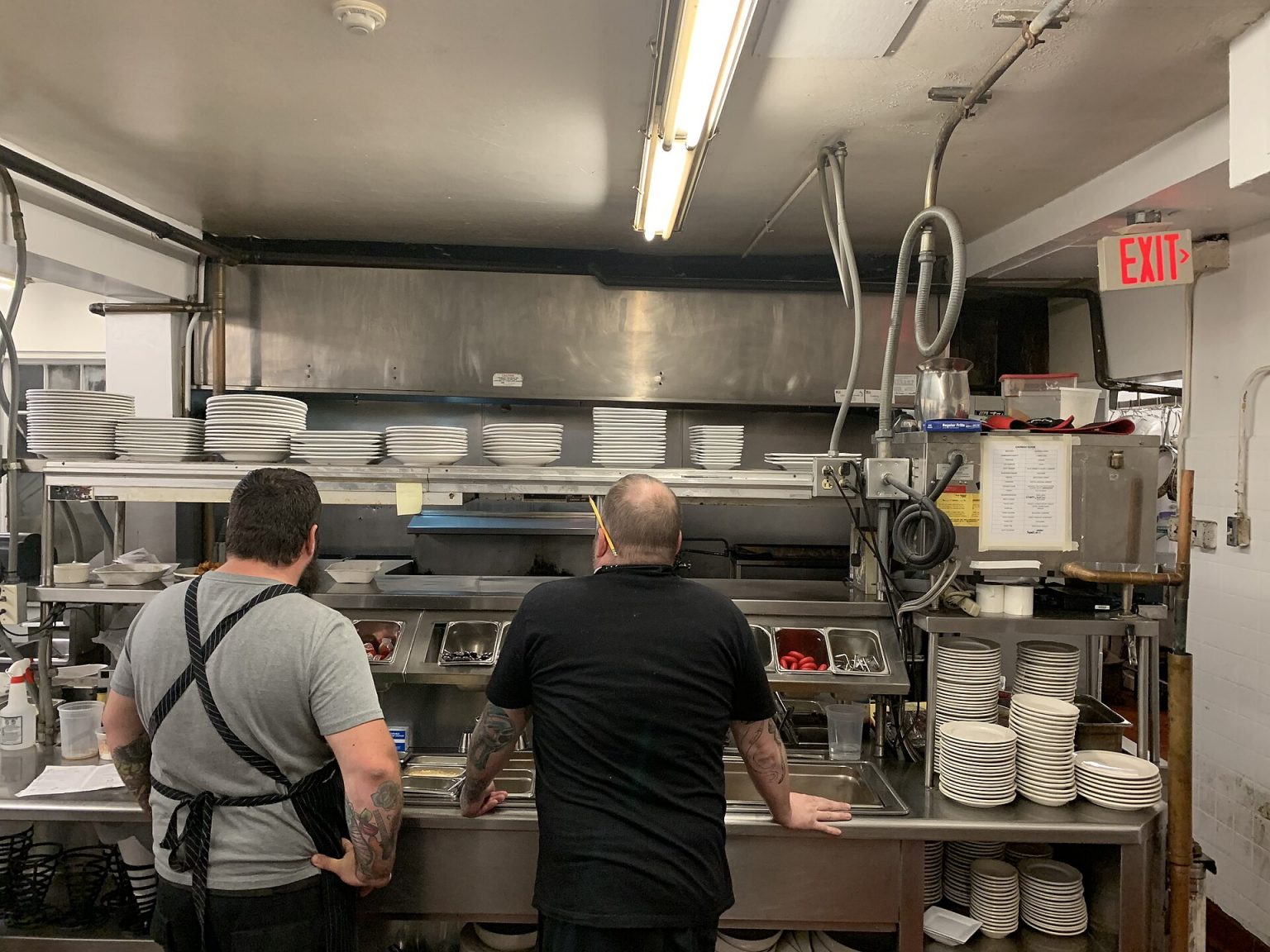
An airport kitchen may serve thousands of covers a day in a compact back-of-house space. That intensity shows up in the electrical installation.
Heat, grease and moisture
Cables and accessories behind fryers, ovens and dishwashers are exposed to heat and contamination. Wash-downs and steam get into accessories that are not suitably rated. Common findings include damaged flexible cables, socket-outlets with broken covers, isolators that have lost their ingress protection and labels that have worn away. These are often minor individually, but together they add up to C2 observations and nuisance tripping.
Heavy and three-phase loads
Combination ovens, rapid-cook ovens, induction ranges, refrigeration and dishwashers draw significant current, often on three-phase supplies. When menus change, new equipment is often plugged in or wired in without anyone checking the circuit’s capacity or the overall maximum demand of the unit. A periodic review of loads against the distribution board schedule prevents overloaded circuits and overheated terminations.
Interlocks, suppression and emergency stops
Ventilation interlocks, canopy fire-suppression systems and emergency stop buttons all rely on electrical control circuits. They should be tested as a system: does the gas valve close when the extract fan stops? Does the suppression system shut down the cooking equipment it is meant to? Is the emergency stop accessible and clearly labelled? These checks often fall between gas engineers, suppression contractors and electricians, so assign clear ownership.
Tip: A thermal imaging survey of kitchen distribution boards under normal trading load can reveal loose connections and overloaded circuits that a dead test will not show. It is non-intrusive and can usually be done without an isolation. See our thermal imaging electrical survey.
Retail units and airside outlets
Retail concessions have a different risk profile. Loads are lighter, but change is constant. Seasonal displays, promotional lighting, digital screens, chillers and point-of-sale equipment are added and moved, often by shopfitters or merchandising teams rather than electricians. Extension leads and multi-way adaptors creep in behind counters.
Units airside, beyond security, add another layer. Every engineer, tool and material must pass through security screening, and many airports apply tool-control procedures so that items cannot be left unattended or lost. Waste and packaging must be removed through approved routes. Small jobs that would take an hour on the high street can take half a day once access is factored in, so it pays to bundle tasks into planned visits.
Display and decorative lighting
High-output display lighting, illuminated signage and LED strips are a common source of defects: undersized drivers, missing enclosures, and connections hidden inside joinery. Make sure any new display lighting is installed under an Electrical Installation Certificate or Minor Works Certificate and recorded on the board schedule.
Portable equipment
Kettles, coffee machines, blenders, tills and handheld scanners all fall under the duty to maintain equipment. There is no fixed legal interval for portable appliance testing; the IET Code of Practice takes a risk-based approach. In practice, kitchen equipment that is moved, cleaned and used heavily needs more frequent inspection than an office monitor. Our article on PAT testing explains how to set sensible frequencies.
A practical testing and inspection schedule
The table below summarises the routine checks most concession operators will need. Intervals are typical starting points. Your risk assessment, your inspector’s recommendation, your insurer and your airport tenant handbook may require something different.
| Activity | Typical frequency | Reference |
|---|---|---|
| Fixed installation periodic inspection (EICR) | Up to five years for most commercial premises, often shorter for intensive kitchens | BS 7671, IET Guidance Note 3 |
| RCD functional test using the test button | Six-monthly, as stated on the BS 7671 RCD notice | BS 7671 |
| Emergency lighting functional test | Monthly | BS 5266-1 |
| Emergency lighting full rated-duration test | Annually | BS 5266-1 |
| Fire alarm devices within the unit | As part of the terminal regime, typically weekly user tests and six-monthly servicing | BS 5839-1 |
| Portable appliance inspection and testing | Risk-based; more frequent for kitchen equipment | IET Code of Practice |
| Thermal imaging of distribution boards | Often annually, as good practice | Insurer and maintenance specification |
| Ventilation and gas interlock function check | At each gas safety service | HSE CAIS23, BS 6173 |
For more detail on the main inspection, see our EICR guide for commercial properties, and for emergency lighting, our guide to BS 5266 testing duties.
Planning work around airport controls and 24-hour trading
The biggest challenge in airport work is rarely technical. It is getting the right people into the right place at the right time with the right permissions.
Passes and vetting
Engineers who work unescorted airside need an airport identification pass. Airports publish their vetting requirements, which typically include five years of employment and address history, criminal record checks and security awareness training. This takes time, so contractors who already hold passes or can be escorted under an agreed arrangement save weeks.
Permits, isolations and fire alarm interfaces
Most airports run a permit-to-work system covering electrical isolations, hot works and work that could affect life-safety systems. If testing will cause a fire alarm activation, or a detector must be covered to prevent dust triggering an alarm, the terminal’s fire control usually needs advance notice and may need to put a zone into test. Never cover a detector or disable a device without the airport’s authorisation, and always confirm it has been restored at the end of the shift.
Out-of-hours windows
Dead testing of circuits, board replacements and kitchen equipment changes generally need the unit to be closed. In a terminal that trades from early morning to late evening, the available window may be only a few hours overnight. A good contractor will survey first, prepare a detailed method statement and stage materials so that the shutdown is as short as possible.
Warning: Do not let urgency override the permit system. Unauthorised isolations or alarm interference in a live terminal can cause wider disruption, breach your lease and, most importantly, put people at risk.
Fit-outs, refits and the end of a lease
Concessions change hands and brands refresh regularly. Each change is an opportunity to improve the installation, and a point at which compliance can slip.
- Design approval: airport operators usually require tenant designs, load calculations and fire alarm interfaces to be approved before work starts.
- Certification: new circuits and alterations must be certified under BS 7671 with an Electrical Installation Certificate or Minor Works Certificate, and the board schedule updated.
- Handover packs: make sure you receive as-built drawings, schedules of test results, equipment data and cause-and-effect information for any fire alarm interfaces.
- Inherited installations: when taking over an existing unit, commission an EICR early. You will become responsible for defects left by the previous tenant.
- Strip-out: at the end of a lease, circuits must be made safe and the airport’s reinstatement requirements met, with redundant cables removed rather than abandoned.
Records, audits and asset information
Airport operators audit their tenants, and insurers and enforcing authorities may ask for evidence after an incident. Keep a single, current compliance file for each unit, ideally digital, containing:
- The current EICR, with evidence that every C1, C2 and FI observation has been resolved
- Electrical Installation and Minor Works Certificates for all alterations since the last EICR
- Up-to-date distribution board schedules and a simple single-line schematic
- Emergency lighting logbook with monthly and annual test records
- Fire alarm records relevant to your unit and the terminal’s cause-and-effect for any interfaces
- PAT records and an equipment register
- Gas interlock and canopy suppression service records
- Thermal imaging reports and actions taken
- Risk assessments, method statements and permits for recent work
An accurate asset register makes every future job faster, because engineers know what they are isolating and where it is fed from. It also makes it much easier to plan replacements before failures cause closures.
Common findings in airport concessions
From the type of work typically carried out in terminal kitchens and shops, these issues come up repeatedly:
- Board schedules that no longer match the circuits after several refits
- Equipment changed without checking circuit capacity or protective device ratings
- Damaged flexible cables and accessories in wet or hot areas
- Emergency luminaires obstructed by new signage, joinery or stock
- Gas interlocks that have been bypassed or have faulty sensors
- Missing or out-of-date logbooks for emergency lighting tests
- Extension leads used as permanent wiring behind counters
None of these is unusual, and all are fixable. The key is to find them through planned inspection rather than through a breakdown at peak trading.
How JKS London can help
JKS London is an NICEIC-approved contractor that has been working since 2004, and our airport compliance work covers commercial kitchens, restaurants and retail outlets across major UK airports. We understand the regulations, procedures and access requirements that airport concessions have to meet, and we plan our work around your trading hours and the airport operator’s controls.
We can provide EICRs and remedial work, emergency lighting testing, PAT testing, thermal imaging surveys, asset registers and schematics, and planned and reactive maintenance across your units. Find out more about our electrical compliance services and maintenance, or book a fixed-scope service through our online booking. For a free, no-obligation discussion about your airport portfolio, contact our team.
Frequently asked questions
Is the airport operator or the concession operator responsible for electrical safety in a unit?
Usually both, for different parts of the installation. The lease or tenant handbook normally defines a point of supply: the airport operator looks after the landlord's distribution up to that point, and the concessionaire is responsible for everything downstream, including fixed wiring, equipment and records.
How often should an airport restaurant have an EICR?
IET Guidance Note 3 suggests a maximum interval of five years for most commercial premises, but the inspector should set the interval based on condition and use. Commercial kitchens see heavy use, heat and moisture, and airport tenant handbooks or insurers may require a shorter interval, so check your lease and policy terms.
Do engineers working airside need special passes?
Yes. Anyone working unescorted airside needs an airport identification pass, which involves background checks such as employment and address history and criminal record checks, plus security awareness training. Escorted access may be possible for occasional visits, but it must be arranged in advance with the airport.
Can electrical work in a terminal unit be done during trading hours?
Some inspection and minor work can be done while trading if it is carefully planned, but isolations, fire alarm interfaces and dead testing usually need agreed out-of-hours windows and permits from the airport operator. Planning these early avoids lost trading and failed access requests.
What records will an airport operator ask a concessionaire to produce?
Typically the current EICR and evidence that remedial work has been completed, Electrical Installation and Minor Works Certificates for any alterations, emergency lighting and fire alarm logbooks, PAT records and up-to-date distribution board schedules. Exact requirements vary by airport, so check your tenant handbook.

Written by the JKS London technical team. NICEIC-approved engineers and compliance specialists maintaining airports, retirement villages, commercial and public-sector buildings since 2004. This guide is general information — for advice on your premises book a free site visit.