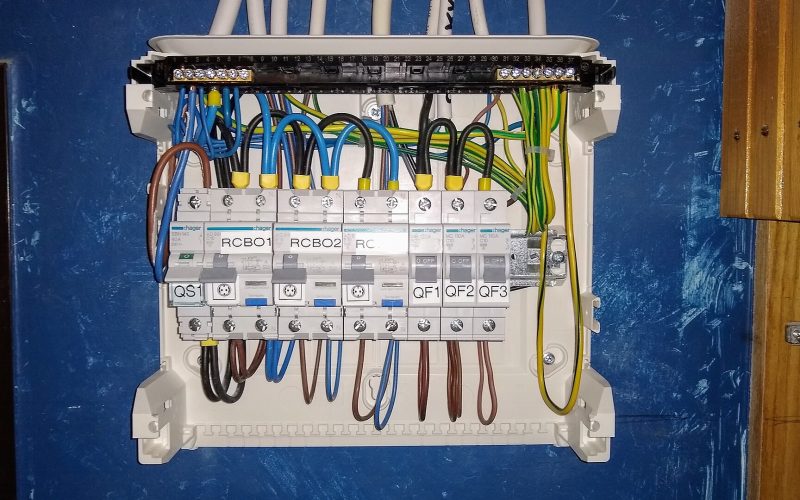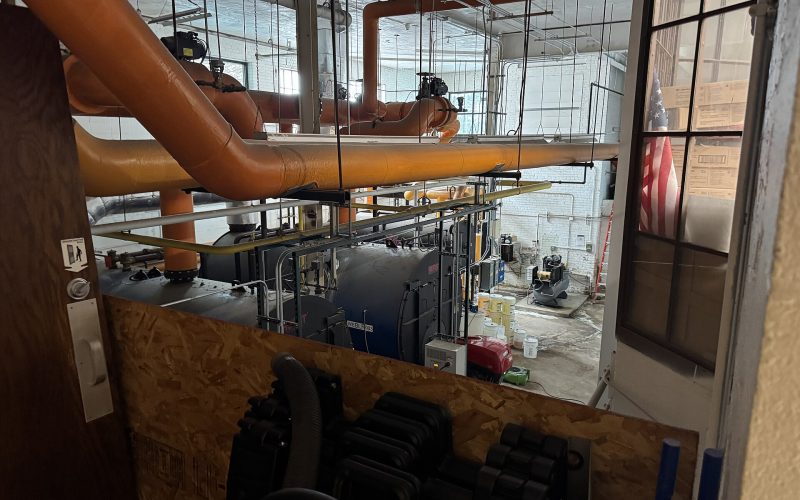
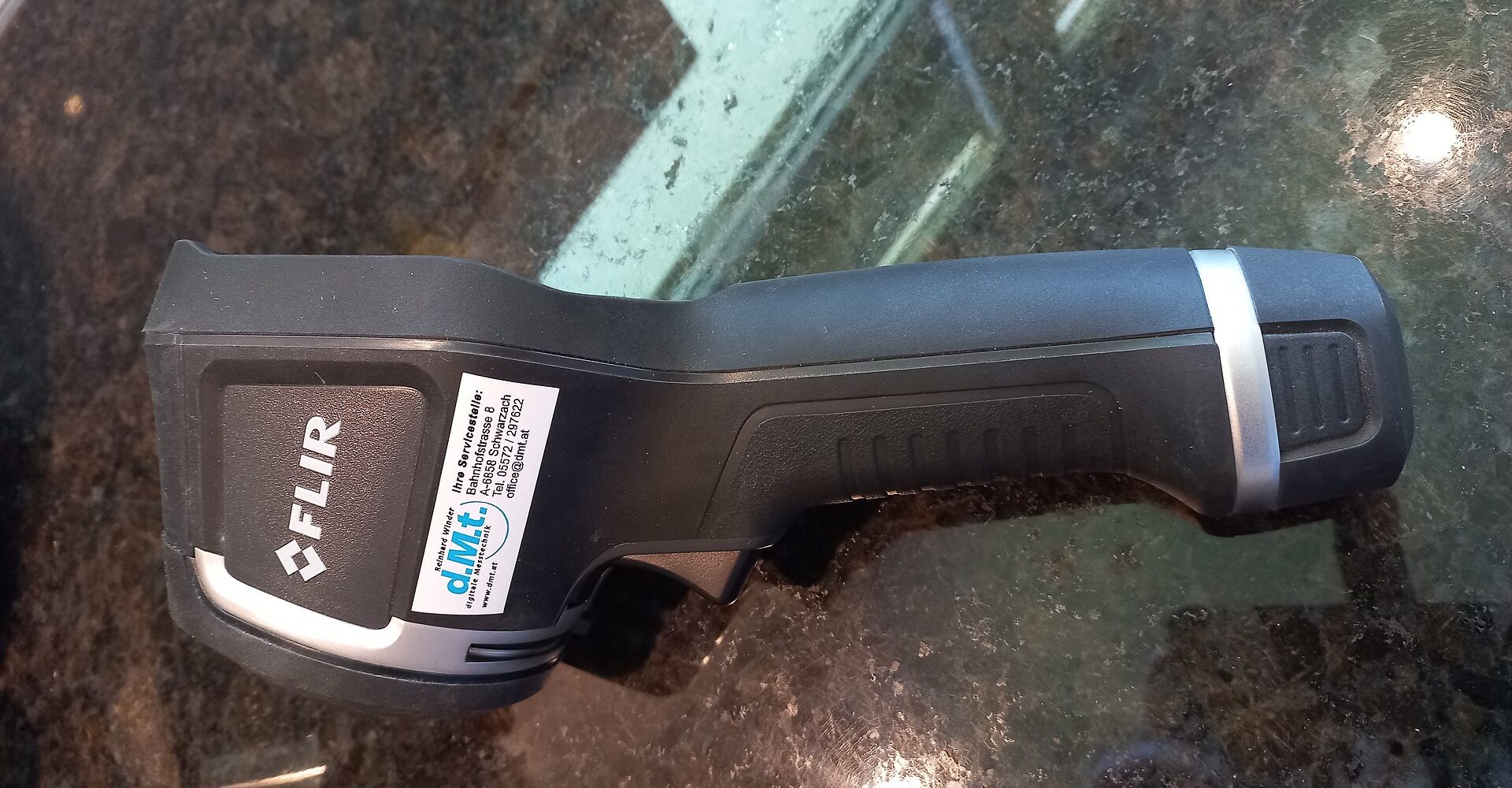
Most electrical failures in commercial buildings do not happen without warning. Long before a busbar joint burns out, a cable lug melts or a switch-fuse trips the whole floor, the faulty component has usually been running hotter than it should for weeks or months. The problem is that nobody can see it: the heat is hidden behind panel covers, in risers and plant rooms that are rarely opened.
A thermal imaging electrical survey (also called a thermographic or infrared survey) makes that heat visible. Using a calibrated infrared camera, a trained engineer scans live equipment under normal load and records any component running abnormally warm. The result is a prioritised list of defects you can fix on your terms, during a planned visit, rather than in the middle of an outage. This guide explains how the surveys work, the standards behind them, how to read the report and how thermography fits alongside your other electrical compliance activities.
Key takeaways
- Thermography finds heat-related defects such as loose connections, overloaded conductors, phase imbalance and failing components while equipment stays in service.
- It supports your duty under the Electricity at Work Regulations 1989 to maintain systems so as to prevent danger, but it does not replace an EICR.
- Surveys must be carried out under representative load by a competent, trained thermographer, with safe systems of work for opening live equipment.
- A good report gives each finding a photo, a thermal image, temperature data, a priority and a recommended action.
- Many organisations survey critical equipment annually and again after significant changes; the right frequency depends on risk.
What a thermographic electrical survey is (and what it is not)
Every conductor carrying current produces some heat. When a connection works loose, a contact surface oxidises or a cable is asked to carry more current than it was sized for, resistance rises and the component heats up more than its neighbours. An infrared camera detects the radiated energy from surfaces and converts it into a temperature image, so the abnormal component stands out clearly against similar equipment.
A thermographic survey is therefore a non-contact, in-service inspection technique. It is quick, it needs no shutdown and it can cover a large number of distribution boards, panels and plant connections in a single visit. It is particularly good at answering the question “is anything in here running hotter than it should?”
It is not a test of the electrical installation’s safety in the BS 7671 sense. A camera cannot tell you whether earthing and bonding are adequate, whether a circuit-breaker will disconnect in time under fault conditions or whether an RCD operates correctly. Those questions are answered by inspection and testing, which is what an Electrical Installation Condition Report (EICR) covers. Our guide to EICRs for commercial properties explains that side in detail.
Why hot spots matter: what the camera is really finding
Heat is a symptom. The value of thermography lies in what the heat tells an experienced engineer about the underlying fault. The most common causes are:
- Loose or poorly made connections. Terminations relax over time through thermal cycling and vibration. A high-resistance joint heats up, which accelerates oxidation, which raises resistance further. Left alone, this cycle can end in arcing and fire.
- Overloaded conductors and devices. Buildings change use. A circuit designed for office lighting may now be feeding heaters, servers or a commercial kitchen. A whole cable or device running warm usually points to load rather than a bad joint.
- Phase imbalance. On three-phase supplies, uneven distribution of single-phase loads shows up as one phase running noticeably warmer than the others, and can also load the neutral.
- Harmonics. Non-linear loads such as LED drivers, IT equipment and variable speed drives can cause additional heating, particularly in neutral conductors.
- Failing components. Deteriorating fuse carriers, contactors, isolators and internal connections in protective devices can all show abnormal heating before they fail outright.
Warning: A thermal anomaly is not just a reliability issue. Overheating connections are a recognised ignition source. If a survey identifies a severe hot spot, treat it as a safety matter: reduce load or isolate if advised, and arrange remedial work without waiting for the next planned visit.
The legal and standards background
Your legal duty
There is no specific law that requires thermal imaging. What the law does require, under regulation 4(2) of the Electricity at Work Regulations 1989, is that electrical systems are maintained so as to prevent danger, so far as is reasonably practicable. Thermography is one of the most cost-effective ways to find deterioration in live equipment that a visual inspection would miss, so it is often a sensible part of how duty holders demonstrate that maintenance is effective. Some insurers and landlords also ask for thermographic surveys as part of their risk requirements, so it is worth checking your policy and lease.
Working safely on live equipment
Because the equipment must be energised, panel covers often have to be removed with live parts exposed. That brings the survey within the scope of regulation 14 of the same regulations, which restricts work on or near live conductors to situations where it is justified and suitable precautions are taken. The HSE’s guidance HSG85, Electricity at work: Safe working practices sets out how to plan this. In practice that means a risk assessment, a method statement, suitably experienced personnel, appropriate PPE, barriers to keep others away, and wherever possible the use of infrared inspection windows or viewing ports so that covers do not need to be removed at all.
Thermography standards and qualifications
Several standards are relevant, and it helps to know which is which:
- BS ISO 18434-1 sets out general procedures for thermography in condition monitoring, including reporting and severity assessment.
- ISO 18436-7 covers the qualification and assessment of thermography personnel. In the UK, the British Institute of Non-Destructive Testing (BINDT) administers PCN certification for condition-monitoring thermography in line with this standard, with three categories of increasing responsibility. Its published scheme requirements set minimum training hours, experience and examinations for each category.
- BS EN 13187 is sometimes quoted in thermography specifications, but it deals with detecting thermal irregularities in building envelopes (insulation defects and air leakage), not electrical equipment. It is the right standard for a fabric survey, not for your switchgear.
When appointing a contractor, ask what thermography training and certification the surveyor holds, and make sure they are also electrically competent. Interpreting an image of a distribution board correctly requires an understanding of how that board is built and loaded.
What equipment should be surveyed
The scope should follow the risk. Start with equipment whose failure would be dangerous, expensive or disruptive, then work outwards.
| Equipment | Typical findings | Why it matters |
|---|---|---|
| Main LV switchboards and busbar chambers | Loose busbar joints, hot incoming terminations, overheating ACBs or MCCBs | A failure here can take the whole building off supply |
| Sub-main distribution boards | Loose terminals, overloaded ways, phase imbalance, hot neutrals | Large number of connections; changes in use are common |
| Motor control centres and plant panels | Hot contactors, overloads and isolators; imbalance on motor supplies | Supports HVAC, pumps and lifts that keep the building running |
| Rising mains and busbar trunking | Hot tap-off units and joints | Hidden in risers, rarely inspected visually |
| Commercial kitchen and catering supplies | Overloaded circuits, heat-damaged terminations near appliances | High, sustained loads and warm environments |
| Data rooms, UPS and battery systems | Hot connections, imbalanced loads | Business-critical; harmonic loads are common |
| EV chargers and solar PV interfaces | Hot terminations on high-current, long-duration loads | Sustained high current exposes weak joints |
For a multi-site estate, it is common to survey all main and sub-main distribution at each site, then add plant and specialist systems according to their criticality.
How a survey is carried out
Planning and load
Heat is proportional to current, so a survey carried out at 7am in an empty office will find far less than one carried out mid-afternoon with air conditioning, lighting and IT fully loaded. The thermographer should agree survey times with you so that equipment is carrying representative load, and should record the load on each item at the time of imaging. A hot spot found at low load can be far more serious at full load.
On site
A typical visit follows this sequence:
- Agree access, permits and isolation arrangements with the site team and identify any equipment that cannot be opened safely.
- Set up barriers and PPE, then remove covers under the agreed safe system of work (or image through infrared windows where fitted).
- Scan each item systematically, capturing a thermal image and a matching visual photograph of any anomaly.
- Record measured temperatures, the comparison reference (a similar component or ambient), the load current and the equipment identity.
- Note limitations: items not accessed, readings affected by reflective surfaces, or equipment not under load.
- Refit covers and confirm the equipment is left as found.
Interpreting the image
Infrared cameras measure radiated energy, not temperature directly. Shiny metal surfaces such as bare copper and polished busbars have low emissivity and reflect heat from elsewhere, which can make them read cooler or warmer than they really are. Experienced thermographers compensate for this, compare like with like (for example, the same terminal on each of three phases) and are cautious about absolute readings on reflective surfaces.
Reading the report: severity and priorities
The report is where the value lies, so it is worth knowing what good looks like. Each finding should include a unique reference, the location and equipment identity, a visual photograph, a thermal image with the hot spot marked, the measured temperature, the comparison temperature and the temperature difference (often written as ΔT), the load at the time and a clear recommended action with a priority.
Severity is normally judged on the temperature difference rather than an absolute temperature, because what matters is how far a component deviates from similar components under similar conditions. Different organisations use different criteria. For example, the US InterNational Electrical Testing Association (NETA) acceptance criteria, summarised here by Eaton, call for immediate action where similar components under similar load differ by more than 15°C. Whatever scheme is used, the report should state its criteria so that you can understand and compare results year on year.
A practical priority structure for facilities teams usually looks something like this:
| Priority | What it indicates | Typical response |
|---|---|---|
| Priority 1 (critical) | Severe overheating with a risk of imminent failure or fire | Immediate action: reduce load or isolate, repair as soon as possible |
| Priority 2 (serious) | Significant deviation that is likely to worsen | Plan repair at the earliest practical opportunity |
| Priority 3 (moderate) | Clear anomaly with no immediate danger | Schedule into planned maintenance and monitor |
| Priority 4 (minor) | Small deviation, possibly load-related | Record and re-check at the next survey |
Tip: Always ask for a re-scan after remedial work. A loose connection that has been re-torqued should show a normal temperature at the next survey. If it does not, the termination or the component may be damaged and need replacing.
Thermography and the EICR: complementary, not interchangeable
It is common for facilities teams to ask whether a thermal imaging survey can stand in for periodic inspection and testing, or vice versa. They answer different questions, and each has blind spots the other covers.
| Thermal imaging survey | EICR (periodic inspection and testing) | |
|---|---|---|
| Equipment state | Energised and under load | Largely de-energised for testing, with some live tests |
| Disruption | Minimal, no shutdown | Planned isolations required |
| Finds | Loose connections, overloads, imbalance, failing components | Earthing, bonding, insulation resistance, disconnection times, RCD operation, damage, non-compliances with BS 7671 |
| Output | Prioritised list of thermal anomalies | Formal report with C1, C2, C3 and FI observations and an overall outcome |
| Best used | Between EICRs and before peak load periods | At intervals recommended by the previous report |
Used together, thermography helps target the EICR and remedial work, and the EICR confirms that the protective measures behind the installation are sound. If you are unsure what the observation codes on your last EICR mean, see our explanation of EICR codes C1, C2, C3 and FI.
How often should you survey?
There is no single legal frequency. An annual survey of main and sub-main distribution is a common starting point for commercial buildings, with more frequent surveys for equipment where failure would have serious consequences, such as hospital, airport or data centre supplies. Good triggers for an additional survey include:
- before a known peak period, such as the run-up to summer cooling load or a retail trading season;
- after significant changes in use, new tenants or new high-current loads such as EV charging or commercial catering;
- after remedial work, to confirm the repair was effective;
- when insurers or a lease require it.
Thermography fits naturally into a planned preventive maintenance strategy. Instead of opening every board to check torque on a fixed schedule, many organisations use thermal imaging to target attention where it is needed.
Getting the most from your survey
A little preparation makes the survey faster and the results more useful. Before the visit, work through this checklist:
- Provide an up-to-date list or asset register of distribution boards, panels and plant to be surveyed.
- Confirm access to plant rooms, risers and locked switch rooms, with keys and escorts arranged.
- Agree survey times when buildings are operating at normal load.
- Identify critical equipment that must not be disturbed and any infrared windows already fitted.
- Share previous thermographic reports and EICRs so findings can be compared.
- Agree the reporting format, severity criteria and how urgent findings will be escalated on the day.
- Plan budget and access for remedial work, so that priority findings are not left waiting.
How JKS London can help
JKS London is an NICEIC approved contractor and has been supporting facilities managers, landlords and businesses across London and the South East since 2004. We can carry out thermal imaging surveys of your distribution equipment as part of an ongoing maintenance programme or as a standalone visit, and our electricians can then complete the remedial work and re-scan to confirm the fix. Because we also deliver EICRs, emergency lighting tests and PAT testing, we can co-ordinate all your electrical compliance activity around one plan.
You can book a thermal imaging electrical survey online, estimate the cost of periodic testing with our EICR cost calculator, or contact us for a free, no-obligation site visit to agree the scope that is right for your building.
Frequently asked questions
Does a thermal imaging survey replace an EICR?
No. Thermography finds heat-related defects in equipment under load, while an EICR inspects and tests the whole fixed installation against BS 7671, including earthing, bonding and protective devices. The two are complementary and work best together.
Will a thermal imaging survey disrupt our business?
Usually very little. The survey has to be carried out while equipment is energised and carrying load, so there is normally no shutdown. Covers may need to be removed under controlled conditions, which is planned in advance with your site team.
What qualifications should a thermographer hold?
Look for formal thermography training and certification, such as PCN certification administered by BINDT to ISO 18436-7, combined with electrical competence so the person can work safely around live equipment and interpret what they see.
How quickly should we act on a hot spot?
It depends on the severity and the criticality of the equipment. The report should give each finding a priority and recommended timescale; the most serious findings may need same-day isolation or load reduction, while minor anomalies can be scheduled into planned maintenance.
Can thermal imaging be used on any electrical equipment?
It works on most low-voltage distribution equipment, switchgear, busbars, cable terminations, motor control centres and plant connections. Some components are hard to read through enclosures or have shiny surfaces that reflect heat, which an experienced thermographer will account for or flag as a limitation.

Written by the JKS London technical team. NICEIC-approved engineers and compliance specialists maintaining airports, retirement villages, commercial and public-sector buildings since 2004. This guide is general information — for advice on your premises book a free site visit.