Every building needs maintenance. The real question is when it happens: before something fails, or after. Planned preventive maintenance (PPM) schedules work in advance to keep equipment and systems in good order. Reactive maintenance responds to breakdowns and defects as they arise. Most organisations use a mixture of both — but the balance between them has a big effect on safety, compliance, running costs and the experience of the people who use the building.
This guide compares the two approaches, explains the legal background, and sets out a practical way to build a maintenance strategy that puts effort where it matters most. It is aimed at facilities managers, property managers, landlords and business owners responsible for commercial, residential and public-sector buildings.
Key takeaways
- Planned preventive maintenance reduces unexpected failures, supports compliance and makes budgeting more predictable.
- Reactive maintenance is still essential — and for low-value, non-critical items, running to failure can be the sensible choice.
- Health and safety law requires workplaces, equipment and safety systems to be maintained; for life-safety and electrical systems, that effectively means planned inspection and testing.
- A good PPM programme starts with an accurate asset register and a criticality assessment, and uses recognised task schedules such as SFG20.
- The aim is not “all planned” but the right blend, reviewed regularly against what the building actually needs.
What we mean by planned and reactive maintenance
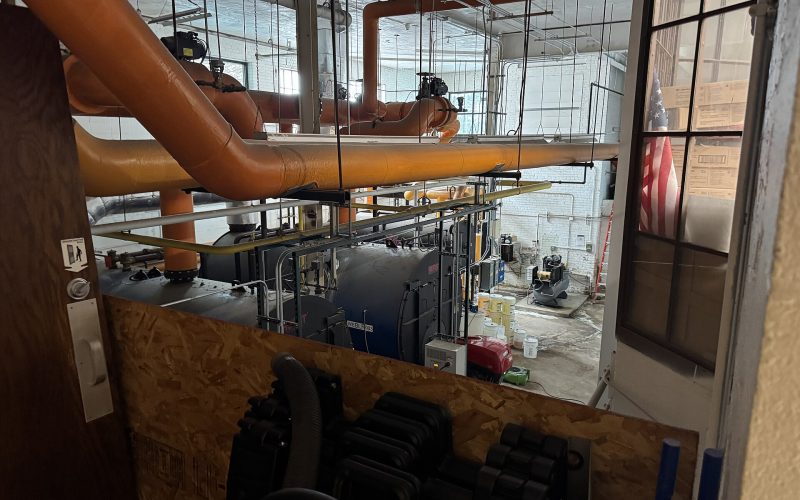
Planned preventive maintenance is work carried out at predetermined intervals, or according to defined criteria, to reduce the likelihood of failure. It includes:
- time-based maintenance — tasks carried out on a fixed schedule, such as quarterly servicing of air-handling units or annual emergency lighting duration tests;
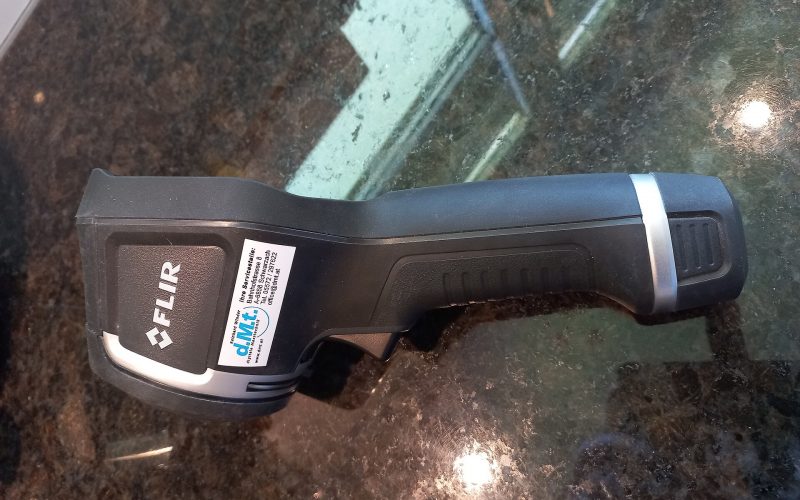
- condition-based maintenance — work triggered by the measured condition of an asset, such as a thermal imaging survey that identifies an overheating connection;
- statutory inspection and testing — checks required to demonstrate compliance with legislation and recognised standards, such as fixed-wire testing and fire alarm servicing.
Reactive maintenance (sometimes called corrective or breakdown maintenance) is work carried out after a fault has occurred or been reported — a tripped circuit, a failed light, a broken door entry panel, a leaking pipe. It may be urgent (an emergency call-out) or routine (a non-critical repair scheduled for the next visit).
Both are legitimate. Problems arise when reactive work becomes the default for everything, including assets whose failure creates safety, compliance or business continuity risks.
The legal and compliance case for planned maintenance
Several pieces of legislation require maintenance without prescribing exactly how it is done:
- Regulation 5 of the Workplace (Health, Safety and Welfare) Regulations 1992 requires the workplace, and equipment, devices and systems to which the regulation applies, to be maintained in an efficient state, in efficient working order and in good repair — and, where appropriate, subject to a suitable system of maintenance.
- The Provision and Use of Work Equipment Regulations 1998 impose a similar duty for work equipment.
- The Electricity at Work Regulations 1989 require electrical systems to be maintained, as may be necessary, to prevent danger.
- The Regulatory Reform (Fire Safety) Order 2005 requires fire safety facilities, equipment and devices to be subject to a suitable system of maintenance.
HSE’s guidance on maintenance of work equipment describes planned maintenance as a useful way to catch faults early and reduce risk, and notes that regular maintenance makes equipment more reliable — meaning fewer breakdowns and less exposure to risky emergency repair work.
In practice, you cannot demonstrate that emergency lighting, fire alarms or a fixed electrical installation are being properly maintained with a purely reactive approach. These systems are designed to work when something else has gone wrong, so a fault often stays hidden until the moment they are needed. Scheduled testing is the only way to find it.
Warning: Never treat life-safety systems as “run to failure”. A failed emergency luminaire or fire alarm device may go unnoticed for months unless it is tested, and the consequences of discovering the fault during a real emergency can be catastrophic.
Comparing the two approaches
| Factor | Planned preventive | Reactive |
|---|---|---|
| Spend profile | Regular, predictable and easy to budget | Irregular, with spikes when major items fail |
| Downtime | Scheduled at convenient times, often out of hours | Unplanned, often at the worst possible moment |
| Safety and compliance | Provides documented evidence of maintenance | Difficult to demonstrate a “suitable system of maintenance” |
| Asset life | Helps assets reach or exceed their expected life | Faults can cause secondary damage and shorten asset life |
| Labour and parts | Planned visits, parts ordered in advance | Emergency call-out rates, expedited parts |
| Occupant experience | Fewer disruptions and complaints | More disruption; repeated failures erode confidence |
| Risk of over-maintenance | Possible if schedules are not reviewed | None — but risk of under-maintenance is high |
The table shows why the answer is rarely all one or the other. PPM brings control and evidence, but a badly designed schedule can waste money servicing equipment that does not need it. Reactive maintenance avoids unnecessary visits, but leaves you exposed when something important fails.
Making the business case
Planned maintenance is sometimes seen as a cost to be trimmed when budgets are tight, because its benefits are failures that never happen. To make the case internally, frame it in terms your finance team and senior managers recognise:
- Cost of failure, not cost of the visit. For each critical asset, estimate what an unplanned failure would mean: emergency call-out charges, lost trading or productivity, damaged stock, temporary equipment hire and the knock-on effect on other systems.
- Compliance exposure. Missing records for statutory and life-safety tasks can affect insurance, leases, fire risk assessments and audits, regardless of whether anything has actually gone wrong.
- Capital planning. Condition data gathered on planned visits shows which assets are nearing the end of their life, so replacements can be budgeted years in advance rather than funded as emergencies.
- Occupant and tenant satisfaction. In retirement living, healthcare and multi-let offices especially, repeated breakdowns damage confidence far more than routine, well-communicated maintenance visits.
Build the case from your own records wherever possible — call-out logs, invoices and downtime reports — rather than generic claims. Real figures from your own estate are far more persuasive.
When reactive maintenance is the right choice
A deliberate run-to-failure decision can be perfectly sensible for assets that are:
- low in value and quick to replace;
- not safety-critical and not covered by statutory or regulatory requirements;
- not critical to business operations, so failure causes inconvenience rather than loss;
- unlikely to cause secondary damage when they fail.
A general lamp in a storeroom or a non-critical extractor fan in an office kitchen might fit these criteria. The key word is deliberate: record the decision on your asset register, make sure there is a clear way for occupants to report faults, and agree response times with your contractor so that repairs happen promptly.
Building a planned preventive maintenance programme
A robust PPM programme can be built in six stages:
- Create an accurate asset register. List every maintainable asset — distribution boards, emergency lighting, fire alarm panels, CCTV, door entry, pumps, air-handling units — with its location, type, age and condition. Without this, you are scheduling guesswork.
- Assess criticality. For each asset, ask what happens if it fails: is there a risk to safety, compliance, business continuity, the building fabric or reputation? Rank assets accordingly.
- Identify statutory and mandatory tasks. Fixed-wire testing, emergency lighting tests, fire alarm servicing, gas safety, lift inspections and water hygiene checks should be scheduled first.
- Set task schedules and frequencies. Use manufacturers’ instructions and recognised industry standards. SFG20 is widely used in the UK as the standard maintenance specification for building services, and lets you distinguish statutory, mandatory and optional tasks.
- Schedule and resource the work. Plan visits around occupancy, combine tasks where possible to reduce disruption, and agree how and when reports and certificates will be delivered.
- Record, review and improve. Track what was done, what was found and what failed between visits. Use the data to adjust frequencies — increasing them for assets that keep failing, and reducing them where condition is consistently good.
Our guide to SFG20 and building maintenance specifications explains how to use the standard to build or benchmark a schedule.
Electrical and life-safety systems in a PPM programme
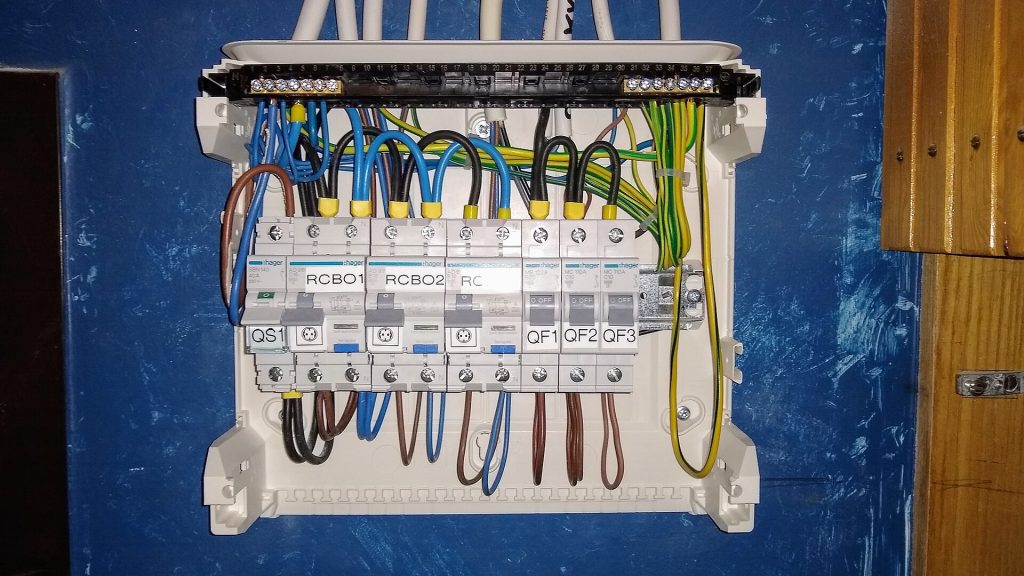
Electrical and life-safety systems are the foundation of most commercial PPM programmes, because they combine legal duties with high consequences of failure. A typical schedule should include:
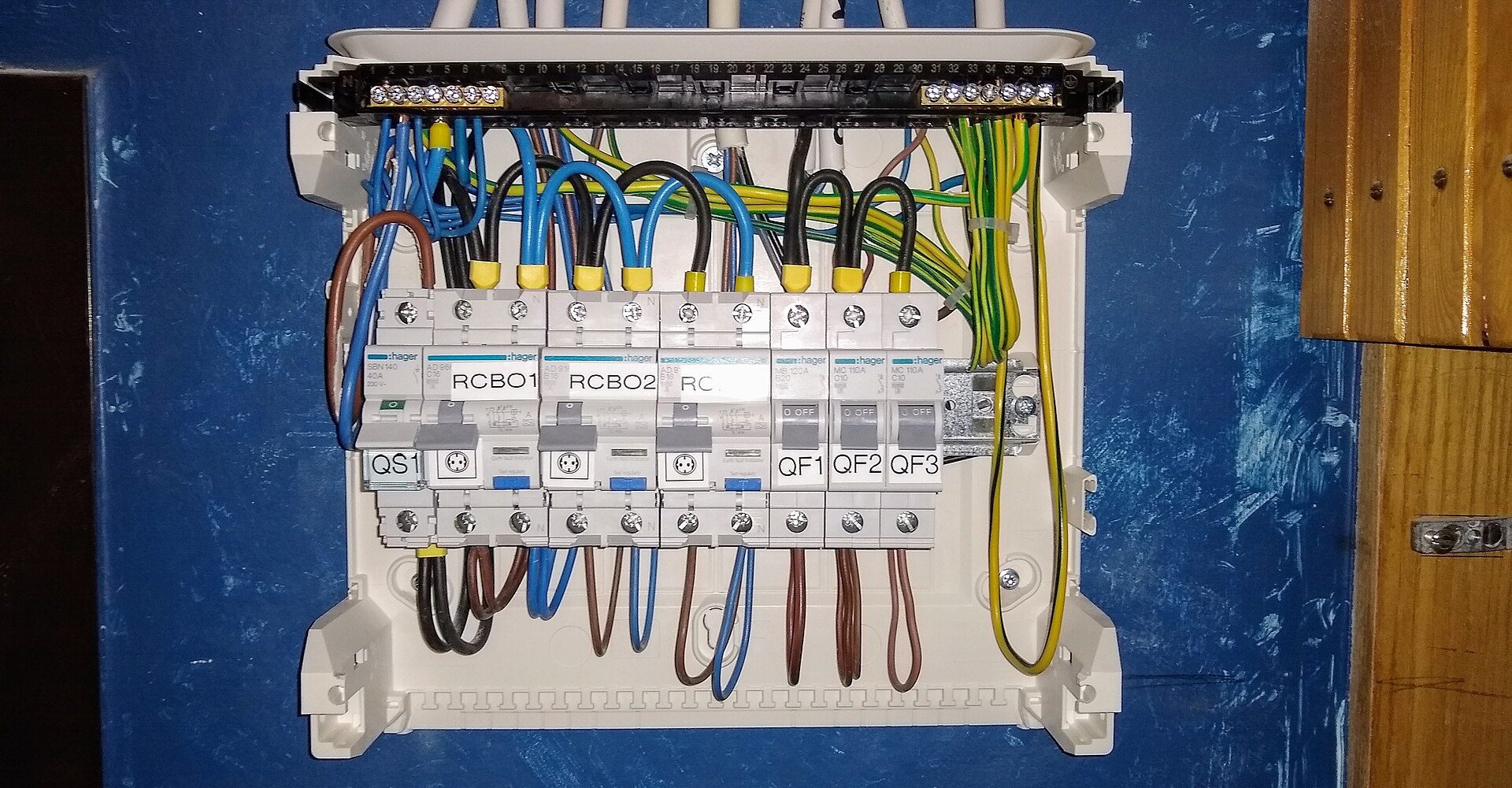
- Periodic inspection and testing of the fixed installation (EICR) at the interval recommended for your premises — see our commercial EICR guide.
- Monthly functional and annual full-duration emergency lighting tests — see our guide to emergency lighting testing to BS 5266.
- Fire detection and alarm servicing to BS 5839-1, with weekly user tests recorded in the logbook.
- In-service inspection and testing of electrical equipment, at risk-based intervals.
- Thermal imaging of distribution boards and switchgear under load, to find overheating before it causes a failure.
- Routine checks and servicing of CCTV, door entry and access control systems.
- Updates to distribution board schedules, drawings and the asset register whenever changes are made.
Condition-based techniques are particularly valuable for electrical systems. A thermographic survey can reveal loose connections, overloaded circuits and failing components without shutting anything down, allowing repairs to be planned before they become emergencies.
Getting the balance right
A mature maintenance strategy usually looks like this:
- Statutory and life-safety tasks are always planned and never deferred.
- Critical assets receive planned and, where practical, condition-based maintenance.
- Non-critical assets receive light-touch planned checks or are deliberately run to failure.
- Reactive work is handled through a clear reporting route, with agreed response times based on priority.
To check whether your balance is right, monitor a small number of indicators: the percentage of planned tasks completed on time; the ratio of planned to reactive jobs; repeat failures on the same asset; and the number of urgent call-outs. If reactive work is rising, or the same equipment keeps failing, your planned programme probably needs adjusting. If PPM visits consistently find nothing, you may be able to extend some frequencies.
Tip: Ask your maintenance contractor to flag every reactive job that could have been prevented by a planned task. Over a year, that list becomes the best possible evidence for where to adjust your PPM schedule.
Choosing a maintenance partner
Whether you outsource all of your maintenance or just specialist elements, look for a partner who:
- can deliver both planned and reactive work, so that findings from PPM visits are acted on quickly;
- holds relevant accreditations and approvals for the work involved, such as NICEIC approval for electrical work;
- provides clear, timely reports and certificates that you own and can access;
- understands the regulations that apply to your sector — whether that is retirement living, healthcare, airport concessions or public buildings;
- can help maintain your asset register and drawings, rather than leaving that burden with you.
How JKS London can help
Since 2004, JKS London has provided planned and reactive maintenance for commercial, public-sector, retirement living and airport clients across London and the South East. As an NICEIC-approved electrical and M&E contractor, we cover electrical and mechanical maintenance, emergency lighting and life-safety systems, CCTV, door entry and security systems — supported by compliance testing and asset stewardship services such as asset registers and schematics.
Learn more about our maintenance services and wider facilities management support, explore our planned maintenance plan, or contact us to arrange a free, no-obligation site visit and discuss a programme that fits your building.
Frequently asked questions
What does a PPM contract usually include?
Typically a schedule of the assets covered, the tasks and frequencies for each, how visits are reported and certified, and often reactive call-out cover with agreed response times. All of this should be set out in a written specification.
How often should a PPM schedule be reviewed?
At least once a year, and whenever assets are added or removed, the building's use changes, or the same equipment keeps failing. A schedule that never changes is unlikely to reflect how the building is really used.
Is planned maintenance worthwhile for a small business?
Yes. Even a simple calendar covering statutory and life-safety checks, with a short list of critical equipment, gives far better control than relying on breakdowns, and it can be scaled up as the business grows.
Do PPM visits have to take place out of hours?
Not always. Many tasks can be done during normal hours, but work that needs electrical isolation or affects occupants, such as fixed-wire testing or full-duration emergency lighting tests, is often best scheduled early, late or at weekends.
Who owns the maintenance records?
The duty holder, normally the client, should own and have access to all maintenance records and certificates. Make sure your contract provides them in a usable format, including at the end of the contract.
Written by the JKS London technical team. NICEIC-approved engineers and compliance specialists maintaining airports, retirement villages, commercial and public-sector buildings since 2004. This guide is general information — for advice on your premises book a free site visit.