A fire detection and alarm system only protects people if it works when it is needed. That sounds obvious, yet fire risk assessors and enforcing officers regularly find systems with faults on the panel, missing logbooks, detectors covered after building works, and servicing visits that have quietly lapsed. For the responsible person, a poorly maintained alarm is both a safety risk and a legal one.
This guide explains how fire alarm testing and maintenance should work in non-domestic premises under BS 5839-1, the British Standard code of practice for fire detection and alarm systems. It covers what the law requires, what changed in the 2025 edition, who does what, and how to keep records that stand up to scrutiny.
Key takeaways
- The Regulatory Reform (Fire Safety) Order 2005 requires fire safety systems to be maintained in efficient working order. BS 5839-1 is the recognised benchmark for how to do it.
- Users should test the system weekly, using a different manual call point each time, and record the result.
- A competent person should service the system every six months; the 2025 edition allows a tolerance of five to seven months.
- Every false alarm should be investigated and recorded. In London, the fire brigade may not attend daytime automatic alarms from many commercial buildings unless a fire is confirmed.
- Changes to the building, the system or its software are modifications and should be certified.
What the law requires
In England and Wales, the Regulatory Reform (Fire Safety) Order 2005, Article 17, requires the responsible person to ensure that facilities, equipment and devices provided for the safety of people, including fire detection and warning systems, are subject to a suitable system of maintenance and kept in an efficient state, in efficient working order and in good repair. The responsible person is usually the employer, or the person in control of the premises, such as the owner or managing agent.
The Order does not say how often a fire alarm must be tested or serviced. That detail comes from BS 5839-1, which is a code of practice rather than law. However, it is the standard that fire and rescue authorities, fire risk assessors and insurers expect to see followed, and departing from it without good reason is hard to defend. The government’s guidance on fire safety responsibilities in the workplace sets out the broader duties, including the fire risk assessment.
BS 5839-1 applies to non-domestic premises and to the common parts of many residential buildings. Fire alarms within individual dwellings are covered by BS 5839-6.
What changed in BS 5839-1:2025
BS 5839-1 was revised in 2025, replacing the 2017 edition. The main changes affecting owners and facilities managers, as summarised by the IET’s Wiring Matters and BSI, include:
| Topic | What changed | What it means for you |
|---|---|---|
| Servicing interval | Six-monthly servicing now has a tolerance, so visits five to seven months apart are acceptable | More flexibility in scheduling, but a missed window is still non-compliance |
| Cause and effect | A cause-and-effect matrix or written description should be provided at handover | Ask for one if you do not have it; it is essential for testing interfaces |
| False alarms | Users should be told that every false alarm must be investigated, with action taken where appropriate | Record and review each false alarm, not just repeated ones |
| Sleeping risk | Smoke detection is expected in rooms where people sleep; heat detectors are no longer acceptable there in L2 and L3 systems | Relevant to hotels, residential accommodation and similar premises |
| Cyber security | New guidance on remote access, authentication and connections to alarm receiving centres | Check how remote access to your panel is controlled |
| Modifications | A new section on extensions and modifications; firmware updates should be certified as modifications | Make sure changes are documented and certified |
| Variations and records | All variations must be recorded in the logbook, and some are no longer permitted | Review historic variations with your servicing provider |
A new edition does not make an existing system non-compliant overnight; British Standards are not retrospective. But maintenance should follow the current edition, and your servicing organisation should tell you where the system falls significantly short of current recommendations so that your fire risk assessment can consider it.
Understanding your system category
What gets tested depends on what was designed. BS 5839-1 defines system categories, and your system’s category should be recorded in its design and commissioning documentation.
- Category M: manual systems with call points only, relying on people to raise the alarm.
- Category L1 to L5: automatic systems designed to protect life, ranging from detection throughout the building (L1) to detection only in escape routes (L3, L4) or specific areas (L5).
- Category P1 and P2: systems designed to protect property, with detection throughout (P1) or in defined high-risk areas (P2).
Many buildings have a combination, such as L2/M. If you do not know your system’s category, ask your servicing provider and record it in the logbook. It matters, because changes to the building, such as new partitions or a change of use, can leave areas uncovered that the original design expected to be protected.
User responsibilities: weekly and routine checks
BS 5839-1 expects the premises to nominate a responsible person to look after the system day to day. That person does not need to be a fire alarm engineer, but they should be trained and have authority to arrange repairs.
The weekly test
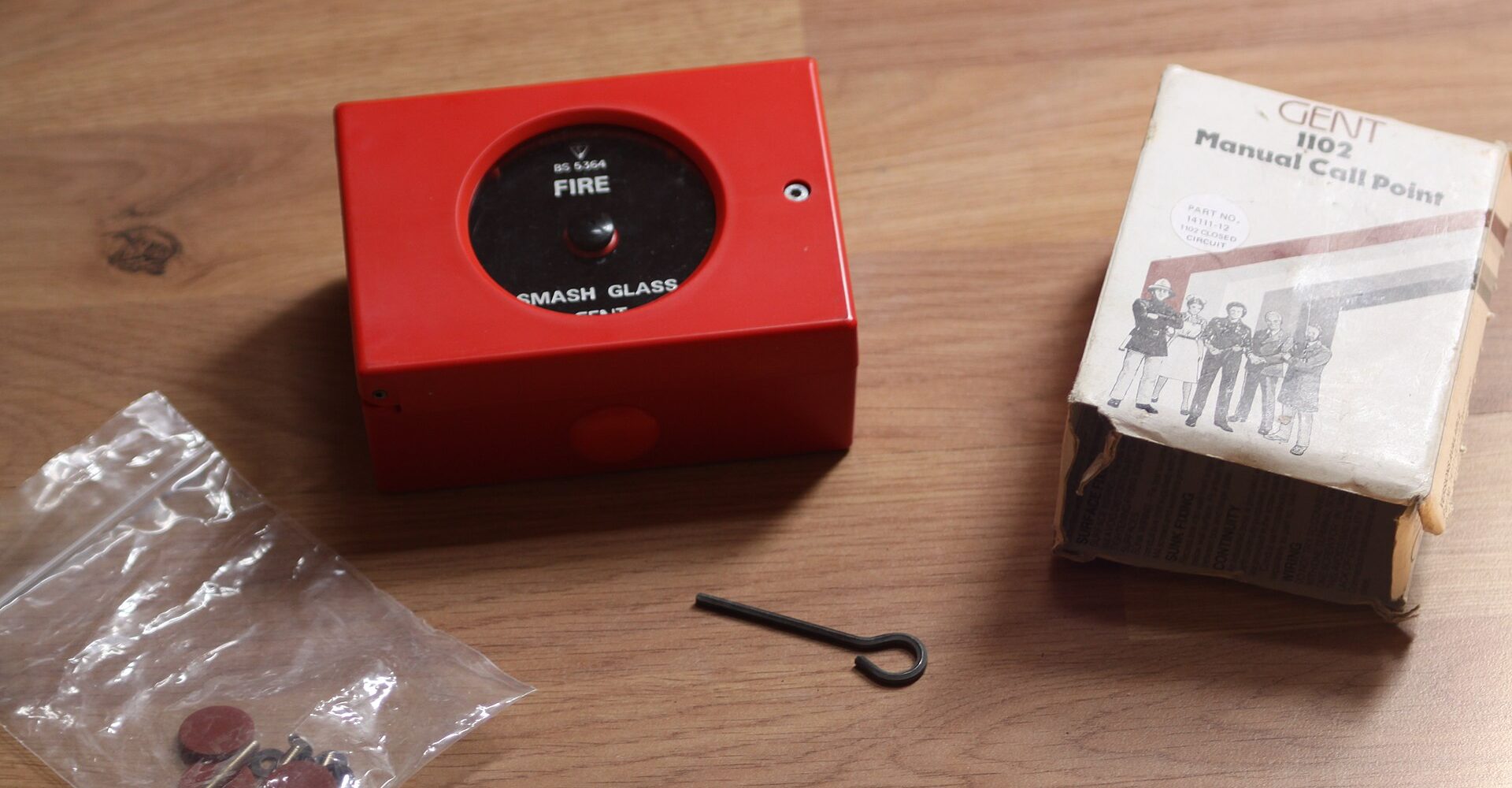
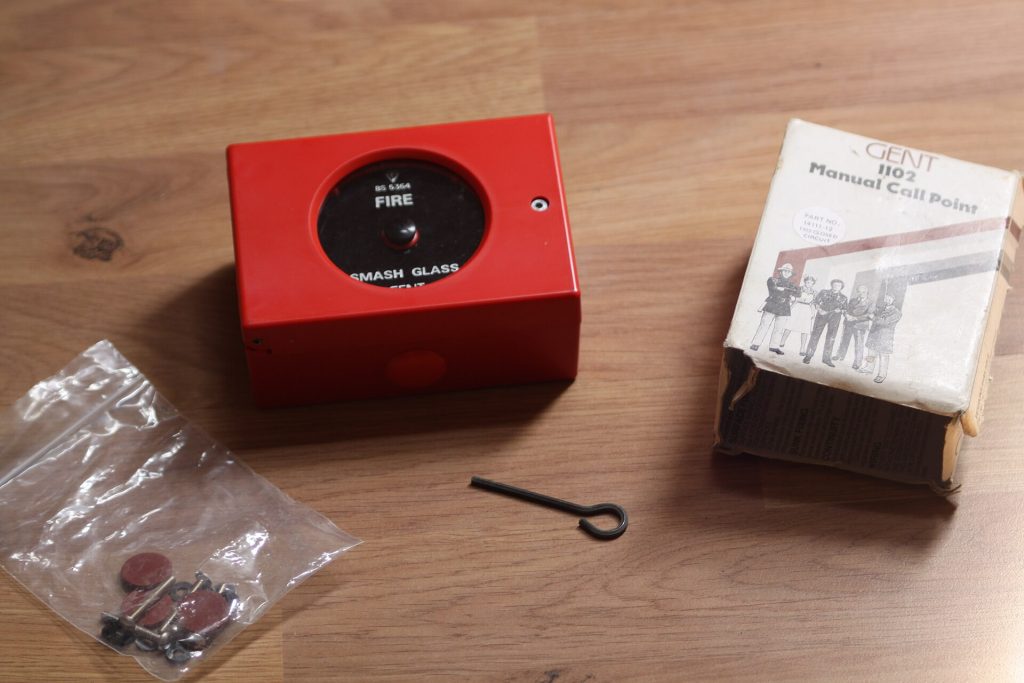
- Operate a manual call point with the test key, using a different call point each week in rotation
- Do the test at roughly the same time each week, so occupants recognise it as a test
- Check that the control panel receives the signal and that the alarm sounds throughout the building
- If the system signals to an alarm receiving centre, notify them before the test and confirm afterwards that the signal was received
- Reset the system and record the test, including which call point was used, in the logbook
The test should be short, typically no more than a minute of sounder operation, so that a real alarm is not confused with a test. Where staff work shifts, occasional tests at other times help make sure night staff also hear the alarm.
Other user checks
The responsible person should also check the panel daily for faults or disablements, make sure call points and detectors are not obstructed, report any damage or faults promptly, and check standby generators where they support the system. Any disablement, such as an isolated zone during building works, should be recorded and reversed as soon as possible.

Six-monthly servicing by a competent person
Periodic inspection and servicing should be carried out by a competent person: someone with specialist knowledge of fire detection and alarm systems, access to the manufacturer’s information and the right test equipment. A typical service includes:
- Reviewing the logbook for false alarms, faults and disablements since the last visit, and checking that they were dealt with
- A visual check for structural changes or changes of use that could affect coverage, such as new walls, mezzanines or storage racking
- Checking standby batteries and the charger, including their condition and capacity
- Testing control panel functions, fault indications and the panel clock, so that event logs are accurate
- Functionally testing a proportion of detectors and call points, so that every device is tested at least once over the year
- Testing alarm sounders and visual alarm devices, and the signal to any alarm receiving centre
- Testing interfaces with other systems in line with the cause and effect: door holders, access control, ventilation shutdown, lift homing, gas valves and smoke control
- Checking that zone plans are accurate and displayed at the panel
- Issuing a servicing certificate and recording any defects or recommendations
Detectors should be tested with the correct method for their type: smoke detectors with a suitable test aerosol or smoke generator, heat detectors with a heat source, and multi-sensors as the manufacturer specifies. Simply pressing a test button on a detector does not prove that it can detect fire.
Tip: Ask your servicing provider to give you a clear list of defects after each visit, classified by urgency, with a quotation for each. Defects that remain open from one service to the next are a common finding in fire risk assessments and enforcement visits.
False alarms and why they matter more than ever
False alarms, or unwanted fire signals, disrupt business, erode occupants’ trust in the alarm and tie up fire service resources. BS 5839-1:2025 now expects every false alarm to be investigated, with appropriate action taken.
The way fire services respond has also changed. London Fire Brigade’s automatic fire alarm policy means crews do not attend automatic alarms from many non-residential buildings between 7am and 8.30pm unless someone calls 999 to confirm a fire. Premises such as homes, hospitals, care settings, hotels, schools and certain heritage buildings are exempt. If your building is not exempt, your fire procedure must make clear who investigates an alarm, how quickly, and who calls 999. Other fire and rescue services have similar policies, so check the arrangements in your area.
Common causes and remedies
- Cooking fumes and steam: review detector type and location near kitchens, showers and tea points; multi-sensor detectors may be more suitable.
- Dust from building works: control works through a permit system and remove detector covers at the end of each shift.
- Accidental or malicious call point activation: consider protective covers, which BS 5839-1 permits, where appropriate.
- System faults: recurring alarms from a single device may indicate contamination or failure and need investigation by the servicing provider.
Modifications, building works and contractors
Buildings change, and alarms must change with them. Fitting out a new office, adding a mezzanine or converting storage into a meeting room can all leave areas without the detection the design intended. The 2025 edition includes a dedicated section on extensions and modifications, and changes such as firmware updates should be certified as modifications.
When contractors work in your building, put clear controls in place:
- Issue permits for any work that could cause false alarms, such as hot works or dust-generating activities
- Agree in advance which zones will be disabled, for how long and who will reinstate them
- Require contractors to remove detector covers and confirm reinstatement before leaving site
- Ask for certification for any alteration or extension to the system
- Update zone plans, the cause and effect, and the logbook after any change
Records: the logbook and supporting documents
If something goes wrong, the logbook is the first thing an investigator will ask for. BS 5839-1 allows it to be kept on paper or digitally. It should record:
- The name of the responsible person and the servicing organisation
- Every weekly test, with the call point used
- All false alarms, with their cause and the action taken
- Faults, disablements and their resolution
- Servicing visits and certificates
- Any agreed variations from the standard
- Alterations and modifications to the system
Alongside the logbook, keep the design, installation and commissioning certificates, the cause-and-effect matrix, current zone plans and the system’s category. Together, these form the evidence that the system has been maintained as Article 17 requires.
Choosing a servicing provider
When appointing a provider, consider their competence and their ability to work on your particular system. Some panels use proprietary software that only certain companies can access, which can limit your options. Ask about:
- Experience with your manufacturer and system type, and access to the necessary software and spares
- Third-party certification for fire alarm maintenance, which is one way to demonstrate competence
- Response times for faults and false alarms
- How defects are reported and how quotations are provided
- Whether they can coordinate fire alarm work with related systems, such as emergency lighting and door access
Fire alarms rarely exist in isolation. Combining fire alarm servicing with emergency lighting testing and electrical inspection can reduce visits and make it easier to keep records in one place. If you manage a higher-risk residential building, our guide to the Building Safety Act for facilities managers explains how these records feed into wider duties.
How JKS London can help
JKS London is an NICEIC-approved contractor, established in 2004, working with commercial, public sector, airport and retirement living clients across London and the South East. We install and maintain life-safety systems, including fire alarm, emergency lighting and door entry systems, and we can help you build a planned maintenance programme that keeps testing on schedule and records in order.
Book a fire alarm inspection online, explore our maintenance services, or contact us for a free, no-obligation discussion about your premises.
Frequently asked questions
Is BS 5839-1 a legal requirement?
No. BS 5839-1 is a code of practice, but the Regulatory Reform (Fire Safety) Order 2005 requires fire safety systems to be maintained in efficient working order. Following BS 5839-1 is the recognised way of showing that duty is met, and enforcing authorities and insurers commonly use it as the benchmark.
Does my existing fire alarm system need upgrading because BS 5839-1 has been revised?
Not automatically. British Standards are not retrospective, and a system designed to an earlier edition is not non-compliant simply because a new edition has been published. However, your servicing organisation should advise you on any significant shortfalls, and your fire risk assessment should consider whether the system is still suitable.
Can I do the weekly fire alarm test myself?
Yes. The weekly test is a user responsibility and is normally carried out by a trained member of staff, such as a premises manager or nominated responsible person. It involves operating a manual call point, using a different one each week, and recording the result in the logbook.
How long is a fire alarm servicing certificate valid?
A servicing certificate records the inspection carried out on that visit. Servicing is due every six months, with BS 5839-1:2025 allowing a tolerance of five to seven months between visits, so the next visit should be booked within that window.
Who can service a fire alarm system?
BS 5839-1 expects servicing to be carried out by a competent person with specialist knowledge of fire detection and alarm systems and access to the necessary tools, spares and information. Third-party certification schemes for fire alarm maintenance are one way to check a provider's competence.

Written by the JKS London technical team. NICEIC-approved engineers and compliance specialists maintaining airports, retirement villages, commercial and public-sector buildings since 2004. This guide is general information — for advice on your premises book a free site visit.